

Blackburn, Cantwell, Heinrich Introduce Legislation to Combat AI Deepfakes
From the Jul 16, 2024 e-EditionNASHVILLE — U.S. Senators Marsha Blackburn (R-Tenn.), member of the Senate Commerce Committee, Maria Cantwell (D-Wash.), Chair of the Senate Commerce Committee, and Martin Heinrich (D-N.M.), member of the Senate AI Working Group, introduced the Content Origin Protection and Integrity from Edited and Deepfaked Media Act (COPIED Act) to combat the rise of harmful deepfakes. The bill would set new federal transparency guidelines for marking, authenticating, and detecting AI-generated content, protect journalists, actors, and artists against AI-driven theft, and hold violators accountable for abuses.
“Artificial intelligence has given bad actors the ability to create deepfakes of every individual, including those in the creative community, to imitate their likeness without their consent and profit off of counterfeit content,” said Senator Blackburn. “The COPIED Act takes an important step to better defend common targets like artists and performers against deepfakes and other inauthentic content.”
“The bipartisan COPIED Act I introduced with Senator Blackburn and Senator Heinrich, will provide much-needed transparency around AI-generated content,” said Senator Cantwell. “The COPIED Act will also put creators, including local journalists, artists and musicians, back in control of their content with a provenance and watermark process that I think is very much needed.”
“Deepfakes are a real threat to our democracy and to Americans’ safety and well-being,” said Senator Heinrich. “I’m proud to support Senator Cantwell’s COPIED Act that will provide the technical tools needed to help crack down on harmful and deceptive AI-generated content and better protect professional journalists and artists from having their content used by AI systems without their consent. Congress needs to step up and pass this legislation to protect the American people.”
The Act:
Creates Transparency Standards: Requires the National Institute of Standards and Technology (NIST) to develop guidelines and standards for content provenance information, watermarking, and synthetic content detection. These standards will promote transparency to identify if content has been generated or manipulated by AI as well as where AI content originated. The bill also directs NIST to develop cybersecurity measures to prevent tampering with provenance and watermarking on AI content.
Puts Journalists, Artists, and Musicians in Control of Their Content: Requires providers of AI tools used to generate creative or journalistic content to allow owners of that content to attach provenance information to it and prohibits its removal. The bill prohibits the unauthorized use of content with provenance information to train AI models or generate AI content. These measures give content owners—journalists, newspapers, artists, songwriters, and others—the ability to protect their work and set the terms of use for their content, including compensation.
Gives Individuals a Right to Sue Violators: Authorizes the Federal Trade Commission (FTC) and state attorneys general to enforce the bill’s requirements. It also gives newspapers, broadcasters, artists, and other content owners the right to bring suit in court against platforms or others who use their content without permission.
Prohibits Tampering with or Disabling AI Provenance Information: Currently, there is no law that prohibits removing, disabling, or tampering with content provenance information. The bill prohibits anyone, including internet platforms, search engines, and social media companies, from interfering with content provenance information in these ways.

In the e-Edition
McKenzie Banner July 16, 2024
Jul 16, 2024 · Read the full issue →
Related Stories
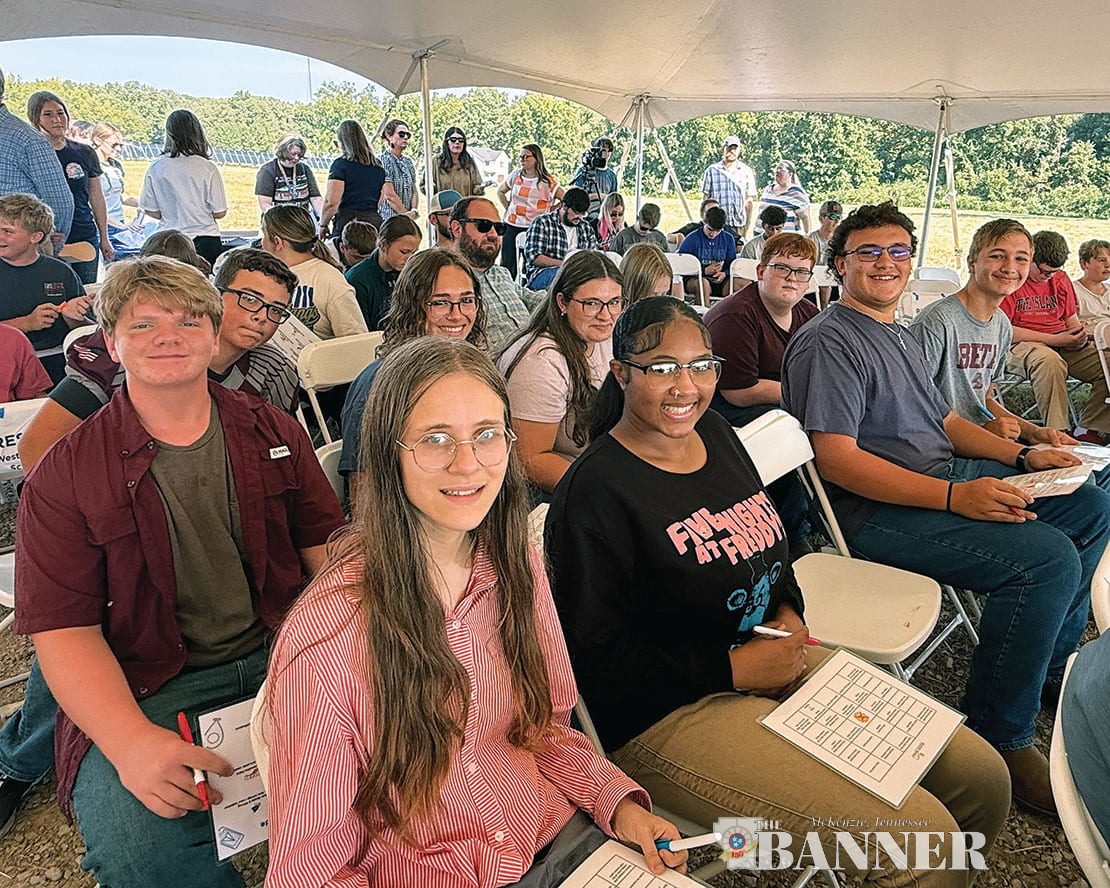
West Carroll Students Attend "Flip the Switch" at Solar Farm
West Carroll students had the opportunity to be part of an exciting moment for our local community this week as they attended the Trezevant Solar Farm “Flip the Switch” event!
Sep 13, 2026

Cash Express Honors McKenzie’s First Responders
McKENZIE (September 11) — On Friday, Cash Express honored McKenzie Police (MPD), McKenzie Fire & Rescue (MFD), and Baptist-Carroll County Ambulance first responders with cakes decorated with the American flag and cards signed by McKenzie businesses thanking them for their…
Sep 11, 2026
Trezevant Solar Farm Flip-the-Switch Event Happening Now
Carroll County Electric Department (CCED) and Tennessee-based Silicon Ranch , owner and operator of one of the nation’s largest fleets of solar facilities and a community-focused energy infrastructure company, invite you to attend a “Flip-the-Switch” ceremony for the new…
Sep 10, 2026
McKenzie Council to Consider Planning Commission Appointments
McKENZIE — The McKenzie City Council will meet Thursday, September 10, at 6 p.m. with a Tennessee Volunteer Firefighter Equipment and Training Grant and two appointments to the McKenzie Planning Commission among the items on the agenda.
Sep 8, 2026