Rural Schools, Special Education Advocates Raise Concerns Over Education Freedom Act
From the Feb 11, 2025 e-EditionThe Education Freedom Act, now law in Tennessee, has sparked debate in the Tennessee legislature and among rural educators, with special education advocates voicing concerns over its potential impact. The bill expands the state's school voucher program, allowing families to use $7,075 per student toward private school tuition, online programs, and other educational expenses. While supporters hail the move as a win for school choice, critics argue it disproportionately affects rural districts and students with disabilities who may lack viable alternatives.
Legislative Breakdown and Opposition
The bill passed the Tennessee House (54-44) and Senate (20-13), largely along party lines. Governor Bill Lee has championed the law as a historic expansion of educational opportunities, arguing that families, not the government, should determine the best schooling options for their children.
"This law empowers parents with the freedom to choose the best education for their kids," Lee said in a statement after signing the bill.
Lt. Governor Randy McNally defended the legislation, calling it a lifeline for parents when local schools fail to meet their children's needs.
"This law ensures that education funding follows the student, not the system," McNally said. "Families who feel their children are underserved by their public schools finally have another option."
However, opposition to the law was bipartisan, with several rural Republican legislators joining Democrats in voting against it. Critics argue that the bill diverts public education funds to private institutions while failing to provide rural families with real alternatives.
Sen. Jody Barrett (R-69), who opposed the bill, issued a blunt statement condemning its passage.
"History will look back on this moment as the day rural Tennessee was sold out. This is a handout to private schools that exist in metro areas, funded by the taxes of rural families who have no access to these options."
Rep. David Hawk (R-5), another opponent, raised concerns about rural funding losses.
"If we can afford to send $7,000 per child to private schools, why are our rural public schools struggling to afford more counselors, nurses, and career training programs?"
Lack of Private School Options in Rural Counties
In Carroll, Weakley, and Henry counties, the lack of private K-12 schools means the voucher program offers no real alternatives for most families. While urban areas like Memphis and Nashville have a range of private institutions accepting state vouchers, rural communities have few, if any, private school options within reasonable commuting distance.
Carroll County: No eligible private K-12 schools.
Weakley County: Dresden Pentecostal Christian Academy exists but does not participate in state voucher programs.
Henry County: No participating private schools, with Paris being the closest town with a limited selection of parochial schools.
Despite these limitations, House Speaker Cameron Sexton (R) insisted that rural families can still benefit from the program through online learning and alternative educational services.
"This law isn't just about private schools—it also expands access to online programs, tutoring, and microschools that give families more flexibility in their children's education," Sexton said.
Governor Lee’s administration argues that the voucher program encourages "educational entrepreneurship," which could lead to new private school startups in underserved areas.
"If there's demand, we expect to see growth in new school options," said Education Commissioner Lizette Reynolds.
However, local school leaders remain skeptical, questioning whether new private school options will materialize in rural Tennessee.
Dr. Myles Hebrard, Director of Schools for Hollow Rock-Bruceton, raised concerns.
"There are families in our district who might qualify for this program, but without a private school nearby, how does this help them?"
Impact on Special Education
A major point of contention is how the bill affects students with disabilities.
Unlike public schools, private institutions are not legally required to provide accommodations under the Individuals with Disabilities Education Act (IDEA). However, some private schools voluntarily offer specialized programs for students with disabilities.
Some private schools require families to sign agreements that exempt the school from IDEA obligations, meaning students may not receive legally mandated services such as individualized learning accommodations, therapy, or behavioral support.
Dr. Lee Carter, Vice President of the Tennessee School Boards Association, questioned the fairness of shifting funds to schools that can pick and choose their students.
"If private schools don't have to enroll every student, is this really about expanding access or just shifting resources?"
Many rural special education administrators fear that public school funding losses could impact essential services, including:
- Speech therapy
- Occupational therapy
- Behavioral support programs
- Specialized learning aids and classroom accommodations
However, Rep. Mark White (R-83), chair of the House Education Committee, rejected claims that special needs students would suffer under the new system.
"Many private schools offer incredible programs for students with disabilities," White said. "Parents should be able to choose the best learning environment for their child, whether that's public or private."
White pointed out that some special needs families have already sought private school alternatives and could benefit from state-funded support.
"For too long, Tennessee families with special needs children have had limited choices," White added. "This changes that."
Still, public school officials worry about long-term funding consequences if the law leads to declining public-school enrollment.
Dr. Hebrard reiterated these concerns.
"This is not just a funding issue; it's a civil rights issue. Our public schools are legally required to serve every child, regardless of ability. If funding is reduced, it could leave students with disabilities without the resources they need to succeed."
Financial Implications for Public Schools
While Governor Lee's administration maintains that public schools will not lose funding due to vouchers, opponents argue otherwise. Because Tennessee’s education funding formula is based on per-student enrollment, rural districts that lose students to the voucher program could see reductions in state funding allocations.
Meanwhile, some rural county officials have questioned whether the bill could face legal challenges, citing Tennessee’s constitutional restrictions on public funding for private institutions. Legal experts suggest these cases could impact the law’s implementation statewide.
House Majority Leader William Lamberth (R-44) dismissed these concerns, saying competition will drive improvements in both public and private schools.
"If we allow competition in every other sector of society, why wouldn't we allow it in education?" Lamberth asked. "Public schools will adapt and improve when they're no longer the only option."
What Comes Next?
With 20,000 vouchers available statewide, school officials in Carroll, Weakley, and Henry counties say they are assessing potential budget risks and preparing contingency plans in case of funding losses.
The Tennessee Department of Education is expected to release additional guidelines in the coming months, but for now, rural educators and special education advocates remain deeply concerned about the law's long-term effects.
As districts brace for potential financial shifts, one question remains:
Will the Education Freedom Act expand opportunities for all students, or will it deepen existing inequalities in rural Tennessee’s education system?
Sources and References: Tennessee General Assembly – Bill Text & Records, Tennessee Department of Education – ESA Program Guidelines, Tennessee Comptroller’s Office – ESA Fiscal Impact, Governor Bill Lee – Official ESA Statement, Tennessee House – Press Releases & Speeches, Tennessee School Boards Association (TSBA), Tennessee Education Association (TEA)
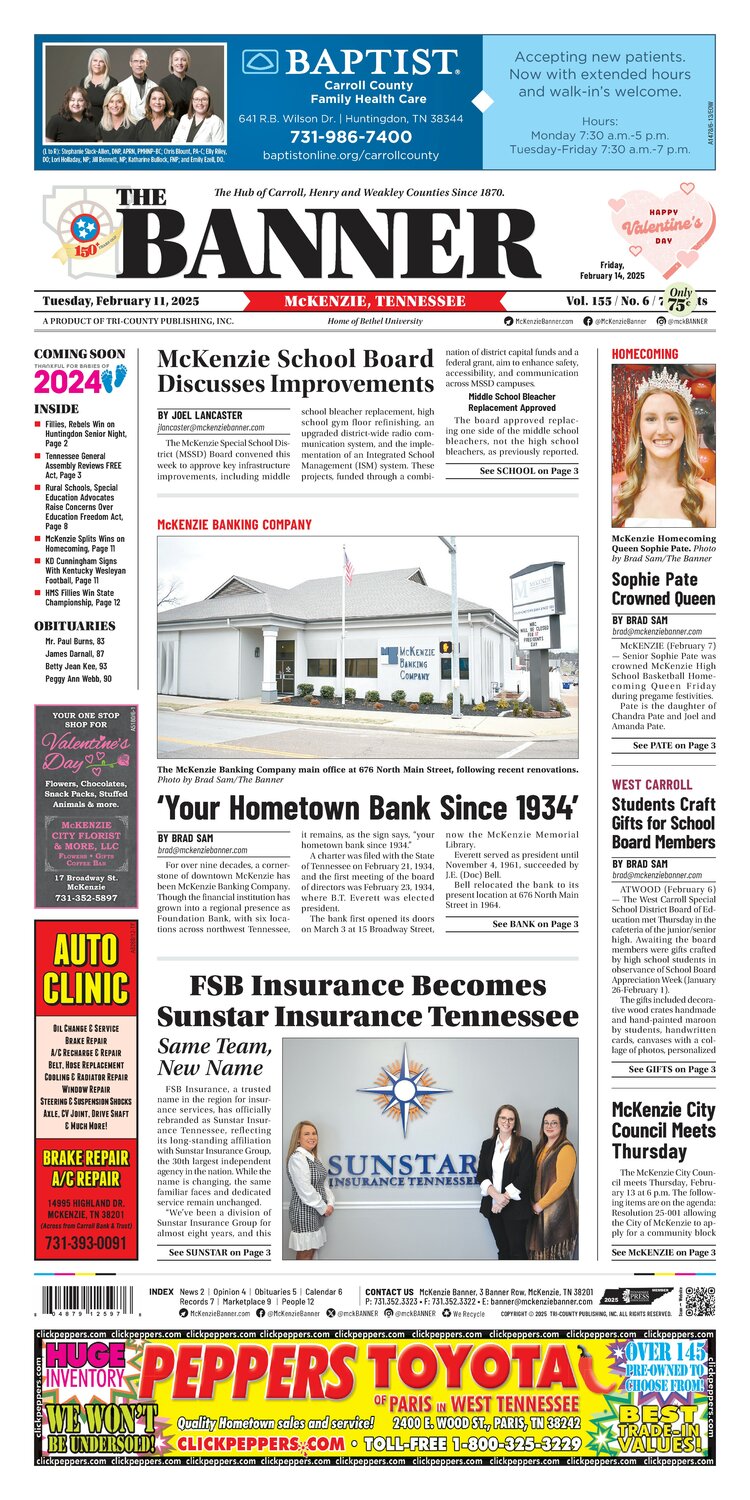
In the e-Edition
McKenzie Banner February 11, 2025
Feb 11, 2025 · Read the full issue →
Related Stories
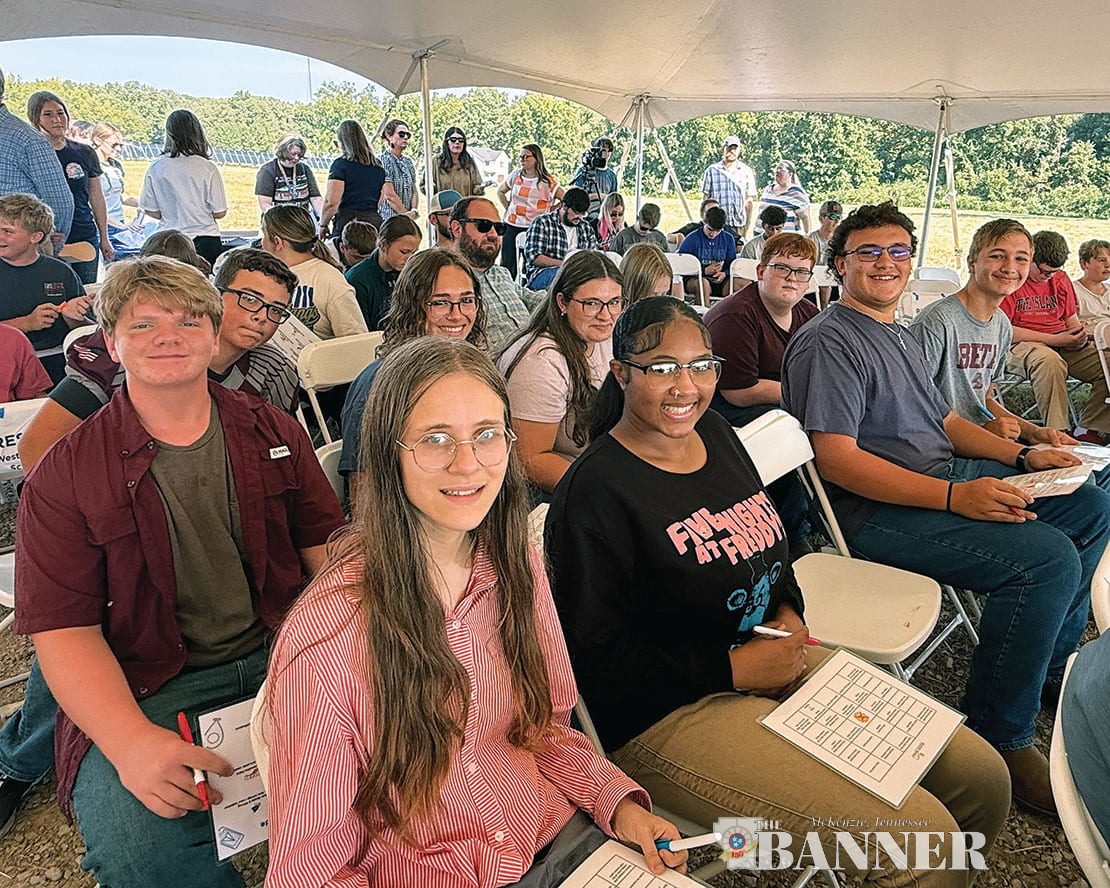
West Carroll Students Attend "Flip the Switch" at Solar Farm
West Carroll students had the opportunity to be part of an exciting moment for our local community this week as they attended the Trezevant Solar Farm “Flip the Switch” event!
Sep 13, 2026
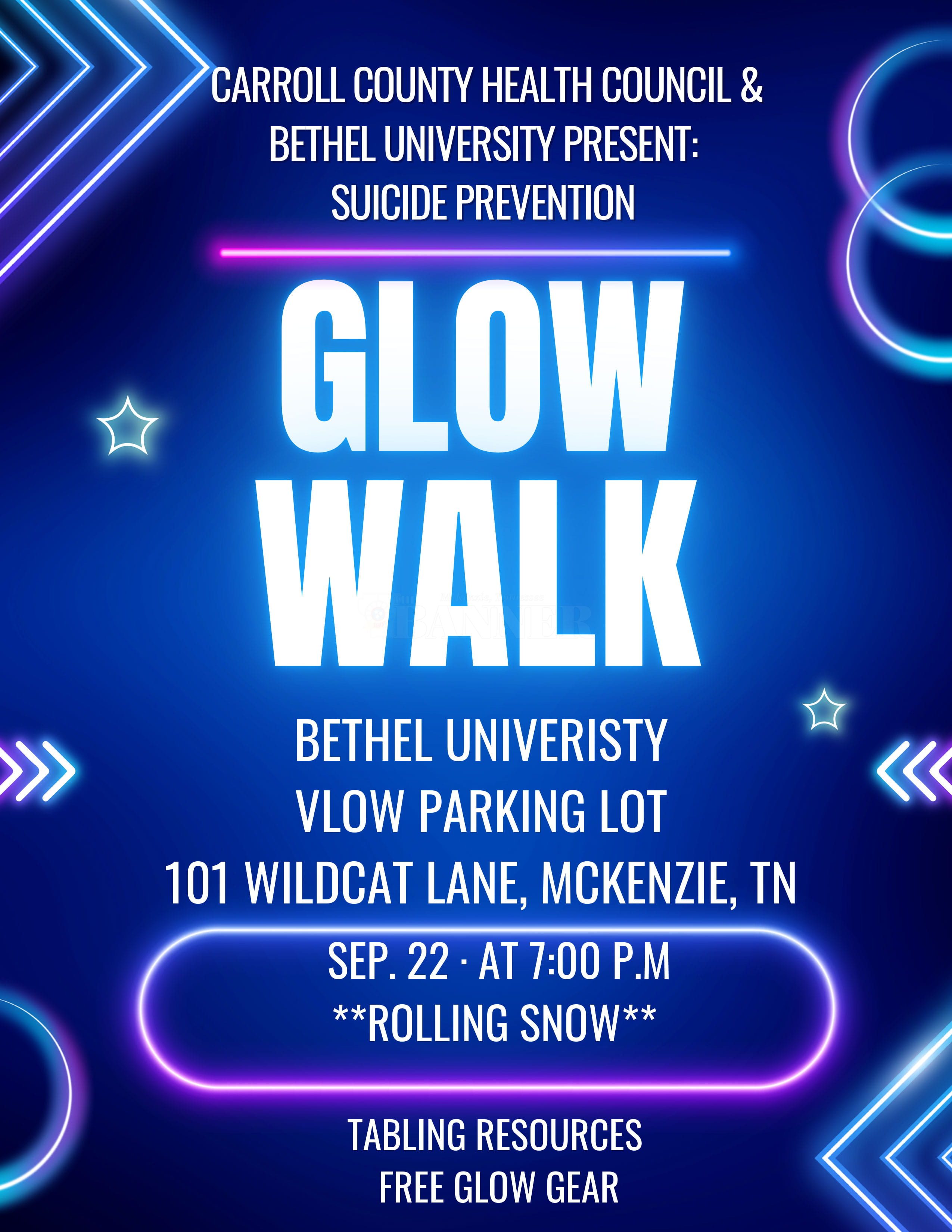
Glow Walk to Bring Awareness, Prevention of Suicide
McKENZIE, Tenn — The Carroll County Health Council, in partnership with Bethel University, will host a Suicide Prevention Glow Walk on Tuesday, Sept. 22, at 7 p.m. to raise awareness and bring community members together in support of suicide prevention.
Sep 13, 2026

Cash Express Honors McKenzie’s First Responders
McKENZIE (September 11) — On Friday, Cash Express honored McKenzie Police (MPD), McKenzie Fire & Rescue (MFD), and Baptist-Carroll County Ambulance first responders with cakes decorated with the American flag and cards signed by McKenzie businesses thanking them for their…
Sep 11, 2026
Trezevant Solar Farm Flip-the-Switch Event Happening Now
Carroll County Electric Department (CCED) and Tennessee-based Silicon Ranch , owner and operator of one of the nation’s largest fleets of solar facilities and a community-focused energy infrastructure company, invite you to attend a “Flip-the-Switch” ceremony for the new…
Sep 10, 2026