Tennessee Charter Expansion Bills Advance
From the Mar 25, 2025 e-EditionNASHVILLE (March 11) — Two bills moving through the Tennessee General Assembly—Senate Bill 1310 (SB1310) and House Bill 1322 (HB1322)—would expand the authority of the Tennessee Public Charter School Commission (TPCSC), reducing the role of local school boards in charter school oversight. If enacted, the legislation would allow certain charter schools to bypass local approval, transfer regulatory responsibilities to state agencies, and modify charter renewal policies.
The proposals align with the recently enacted Education Freedom Act (HB0001), which established a state-run school voucher program, signaling a broader transition toward state-led education policy.
Charter Schools Bypassing Local School Boards
Under current law, charter schools must apply for approval through local school boards. If denied, they can appeal to the TPCSC, which has the authority to override local decisions.
SB1310 and HB1322 would allow some charter schools to apply directly to the state commission, bypassing local approval in specific cases:
- If a school district has three or more charter denials overturned by the TPCSC within three years, new charter applicants in that district would apply directly to the commission for five years.
- Charter operators replicating an existing high-performing charter school would also be eligible to bypass local approval.
These provisions would remove local school boards from key charter approval decisions, shifting authority to the state-appointed commission. Supporters argue this change prevents political interference and streamlines the approval process for high-quality charters. Critics, including some school board members and public education advocates, warn that it could weaken local accountability and diminish district control over student enrollment.
Shifting Oversight to State Agencies
Currently, the Tennessee Department of Education manages charter applications, monitoring, and appeals. SB1310 and HB1322 would transfer these responsibilities to the Tennessee Public Charter School Commission and the State Board of Education:
- The TPCSC would oversee charter applications, appeals, and approvals.
- The State Board of Education would regulate and enforce charter school policies.
This shift consolidates charter oversight within agencies dedicated to charter operations rather than the broader Department of Education. Proponents argue that a more specialized approach could improve efficiency, while opponents caution that it centralizes decision-making, reducing local flexibility.
Changes to Charter Renewals and Enrollment Policies
SB1310 and HB1322 would also alter charter school renewal terms:
- Current law grants charter schools 10-year renewals.
- The proposed changes would allow renewals of five to 10 years, at the discretion of the TPCSC.
Shorter renewal periods would permit more frequent state reviews of charter school performance but could also introduce uncertainty for schools and families planning long-term.
Additionally, the bills expand special enrollment preferences for university-run charter schools, allowing them to reserve up to 25% of seats for faculty children (SB1310). This provision grants university-affiliated charters greater admissions flexibility, prioritizing faculty families within publicly funded schools.
Connection to the Education Freedom Act
The Education Freedom Act (HB0001), passed earlier this session, removed local school board control over voucher distribution by creating a state-run voucher program. SB1310 and HB1322 take a similar approach by shifting charter school approvals to a state-level process.
Both measures diminish local authority over school governance, placing more decision-making power under state agencies.
A Shift Toward State-Controlled Education Policy
SB1310 and HB1322 reflect a growing state-led approach to education policy in Tennessee, reducing local school board authority over charter approvals, renewals, and enrollment regulations.
If passed, these bills would further centralize charter school governance, shifting key decisions from locally elected school boards to state agencies. The legislative debate continues over whether this approach ensures consistency in education policy or undermines local control over public schooling.
- Tennessee General Assembly – SB1310 Bill Text & Status: wapp.capitol.tn.gov
- Tennessee General Assembly – HB1322 Bill Text & Status: wapp.capitol.tn.gov

In the e-Edition
McKenzie Banner March 25, 2025
Mar 25, 2025 · Read the full issue →
Related Stories

West Carroll Students Attend "Flip the Switch" at Solar Farm
West Carroll students had the opportunity to be part of an exciting moment for our local community this week as they attended the Trezevant Solar Farm “Flip the Switch” event!
Sep 13, 2026
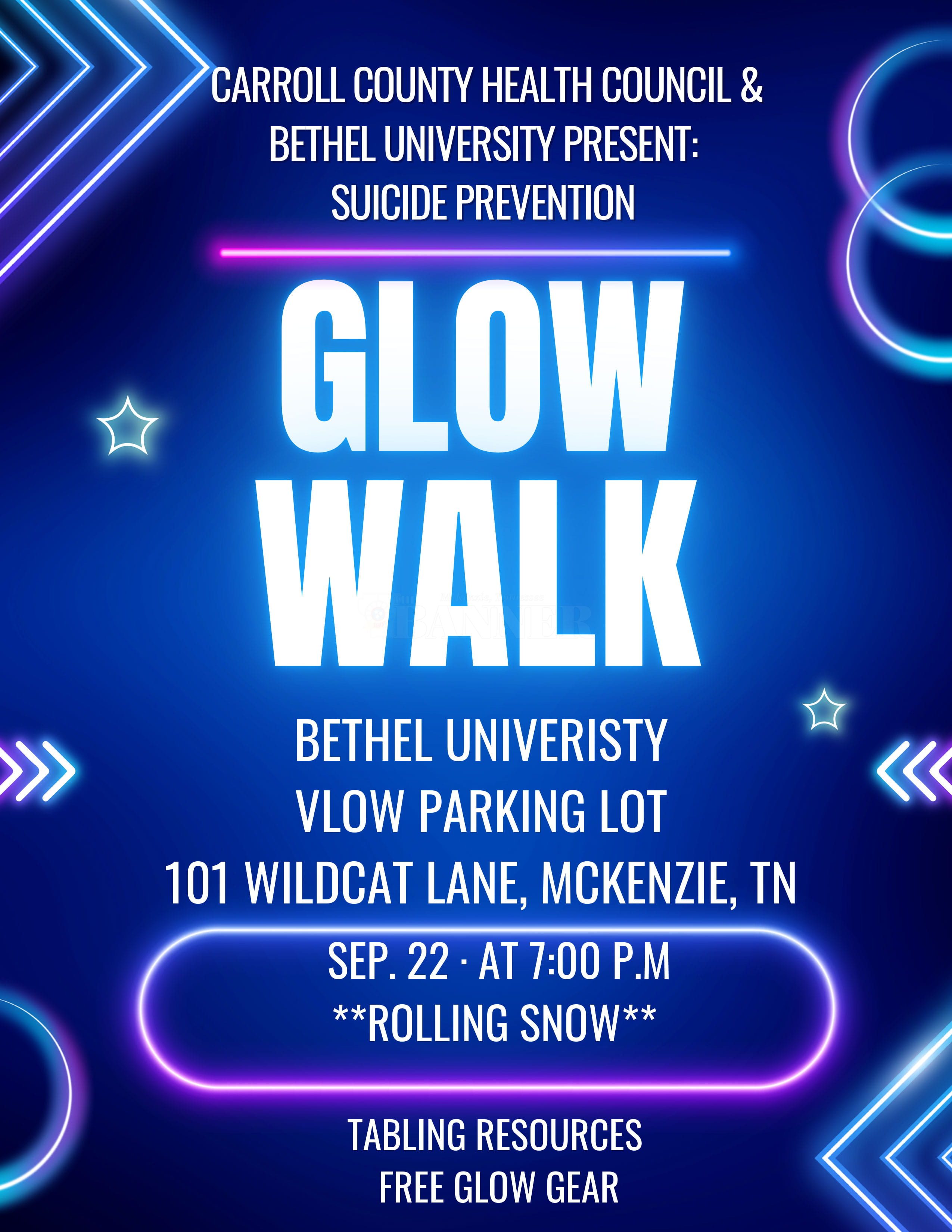
Glow Walk to Bring Awareness, Prevention of Suicide
McKENZIE, Tenn — The Carroll County Health Council, in partnership with Bethel University, will host a Suicide Prevention Glow Walk on Tuesday, Sept. 22, at 7 p.m. to raise awareness and bring community members together in support of suicide prevention.
Sep 13, 2026

Cash Express Honors McKenzie’s First Responders
McKENZIE (September 11) — On Friday, Cash Express honored McKenzie Police (MPD), McKenzie Fire & Rescue (MFD), and Baptist-Carroll County Ambulance first responders with cakes decorated with the American flag and cards signed by McKenzie businesses thanking them for their…
Sep 11, 2026
Trezevant Solar Farm Flip-the-Switch Event Happening Now
Carroll County Electric Department (CCED) and Tennessee-based Silicon Ranch , owner and operator of one of the nation’s largest fleets of solar facilities and a community-focused energy infrastructure company, invite you to attend a “Flip-the-Switch” ceremony for the new…
Sep 10, 2026