

Weekly 150: Jack Daniel
From the Apr 9, 2024 e-Edition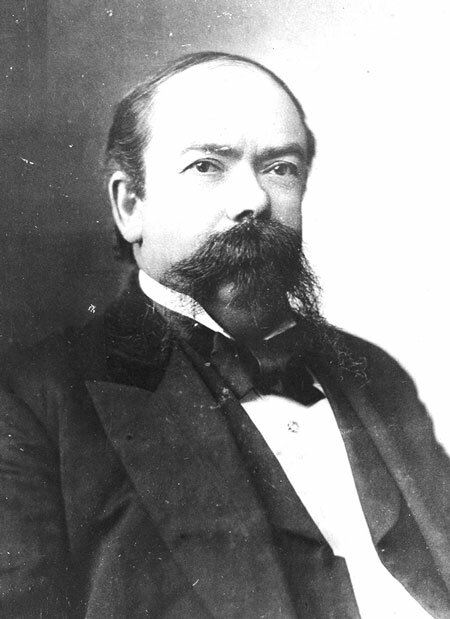
Last week, much to my chagrin, I was not only surprised by the story of Lem Motlow but also by the fact that I have never written about one of Tennessee’s most prolific sons, Jack Daniel. I’m not one to shy away from occasional libations, especially one of the brown spirit nature. So this week, it is a fine time to devote a little ink to the whiskey maker.
Amidst the backdrop of the post-Civil War South, in the small township of Lynchburg, the legend of Jack Daniel was born. He would go on to create a legacy that goes far beyond whiskey as his name and his brand have endured for generations.
He was born Jasper Newton Daniel on September 5, 1846, in Lynchburg, Tennessee. He was the youngest of ten children born to Calaway Daniel and Lucinda Cook Daniel. His childhood was marked by hardship and tragedy. His father died when he was only a child, leaving the family in dire financial straits. At the age of 12, Jack’s mother passed away, leaving him orphaned and without any immediate family.
Despite early setbacks, Jack Daniel possessed an entrepreneurial spirit from a young age. He was taken in by a local Lutheran minister, Dan Call, who ran a general store and distillery. It was during this time, Jack would first learn the art of whiskey making.
Under Call’s guidance and the tutelage of Nathan “Nearest” Green, Jack learned the intricacies of distillation, from mashing the grains to the precise art of barrel aging. Green was a slave of Call’s who was considered a master distiller.
He quickly showed a natural talent for the craft, and by the age of 16, he was running the distillery for Call. However, Jack’s ambitions extended beyond the confines of Call’s operation. He dreamed of creating his brand of whiskey, one that would stand apart from the rest.
In 1866, at the age of 21, Jack Daniel founded his distillery in Lynchburg, Tennessee. He named it the Jack Daniel Distillery, and it was here that he began producing what would become known as Jack Daniel’s Tennessee Whiskey. He hired Nearest Green as his head distiller. He went on to employ two of Nearest’s sons, George and Eli. In all, at least three of Green’s sons were a part of the Jack Daniel Distillery staff. At least four of Nearest’s grandchildren joined the Jack Daniel’s team, Ott, Charlie, Otis and Jesse Green. In all, seven straight generations of Nearest’s descendants worked for Jack Daniel Distillery, with three direct descendants continuing to work there as of November 2017.
From the outset, Jack set out to create a whiskey of unparalleled quality, using only the finest ingredients and employing a unique charcoal mellowing process that he had learned from his mentor.
In 1875, on receiving an inheritance from his father’s estate (following a long dispute with his siblings), Jack founded a legally registered distilling business. He took over the distillery when Call quit for religious reasons. By the 1880s, Jack Daniel’s was one of 15 distilleries operating in Moore County and the second-most productive behind Tom Eaton’s Distillery. In 1884, Daniel purchased the hollow and land where the distillery is now located.
Despite facing numerous challenges, including a fire that destroyed the distillery in 1896, Jack persevered, rebuilding his operation and expanding his reach. He was a shrewd businessman, with a keen eye for marketing and promotion. He understood the power of branding, and he worked tirelessly to establish Jack Daniel’s as a symbol of quality and craftsmanship.
One of the key factors in Jack Daniel’s success was his commitment to innovation. He was always searching for new ways to improve his whiskey, whether it was experimenting with different grain blends or refining the distillation process. He was also one of the first distillers to embrace the use of glass bottles, which helped to distinguish his product on store shelves.
But perhaps Jack Daniel’s most enduring legacy is the unique culture that he fostered around his brand. He was known for his generosity and hospitality, often welcoming visitors to his distillery with open arms. He treated his employees like family, offering them fair wages and providing for their well-being. In an era marked by exploitation and inequality, Jack Daniel stood out as a compassionate and enlightened employer.
In 1907, due to declining health, Jack, who had never married or had any children, gave control of the distillery to his nephew, Lew Motlow. Under Motlow’s stewardship, Jack Daniel’s Whiskey would become one of the best-selling spirits in the world.
In 1911, Jack died from blood poisoning at the age of 61. An oft-told tale is that the infection began in one of his toes, which he injured one morning at work by kicking his safe in anger when he could not get it open (he was said to always have had trouble remembering the combination). However, modern biographers assert that the story is not true, offering evidence that Daniel raged on the safe a few years before dying of unrelated gangrene.
More Photos & Video
In the e-Edition
McKenzie Banner April 9, 2024
Apr 9, 2024 · Read the full issue →
Related Stories
Hunker Down with Kes: Come Watch the Parade with Me
For some, it might be the long-gone City Café. Or the Polar Bar. Or Freemen’s Menswear. Or maybe you remember buying some chocolate-covered peanuts at the Ben Franklin 5 & 10 Cent Store. Or a spiral notebook for going back to school from the Golden Rule. Or shopping for a Christmas toy in the basement of J. A. Abernathy’s Hardware…
Sep 8, 2026
Hunker Down with Kes: ‘Hello Again’ Was All She Said…
But she would say it each week with the most genuine smile I have ever witnessed. I couldn’t think of anything to say. She was a rising country music star. I was just hanging around backstage because Mr. Bud Wendell, the manager of the world-famous Grand Ole Opry, had taken a liking to me.
Sep 1, 2026

The Wit and Wisdom of David Johnson: The Ultimate Gamechanger
Before the world was breathed into existence, Holy Spirit, Christ, and Father contemplated the plan for mankind. At the forefront of their discussion was the means of redemption.
Sep 1, 2026
The Wit and Wisdom of David Johnson: Any Way You Measure it Camping is an Adventure
I could probably write a book solely devoted to my camping adventures and the crazy, wonderful, amazing, unexpected things that happened. I’d grown up camping with my family, but it was something brand-new for my wife. However, she became a devotee even when our two daughters were babies. Tents. Tents that leaked. That’s how we started out. Sleeping bags on the ground. Camping with no electricity, a bathhouse lit by a skylight, and cold showers.
Aug 25, 2026