

Willie Oglesby Jr.: On the Front Line of Integration
From the Feb 25, 2025 e-Edition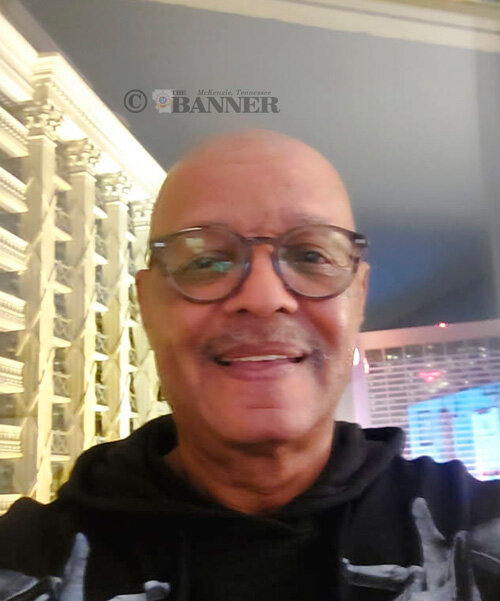
Desegregation began in McKenzie schools in the fall of 1965 when a small number of black students in each grade were selected to transfer from Webb School to McKenzie public schools.
One such student was sophomore Willie Oglesby Jr., the oldest of the seven children of Alvernia and Willie Oglesby Sr.
Oglesby told The Banner, “When we arrived that first day, it was a different experience. The kids were outside chatting, and then everything got quiet. For the first few days, really, everybody was pretty much in shock. But we acclimated. We found out where everybody stood in life. There were difficult days. You would hear little snipes, sometimes the n-word. But you keep going.”
He recalled an incident after PE in the showers. “It got quiet, and the guys were just looking. Someone said, ‘We were told you guys had tails.’”
Oglesby felt he did have one advantage in integrating. “I had the upper hand, because my mother was a maid for Bethel President [Roy N.] Baker, so I knew more people.”
He said, “Teachers were the ones that gave a lot of support.” For one, he already knew Coach Dewey Chism as his mother had kept Chism’s kids.
“Naomi Blanche,” Oglesby said, “was the most inspirational. She was my English teacher. Some teachers wouldn’t call on you, but she did.” He also noted the support he received from teachers Barbara Boyd and James Kirk.
“I’ve always been a person who likes someone for who they are, and my classmates gravitated toward me. The parents had a tendency to paint a bad picture, but the kids saw for themselves and rebelled.”
“At Webb, I was always in plays. I went out for the play at MHS, but I wasn’t allowed. Then, students wanted to vote for me for sophomore class president, but the administration wouldn’t have it.”
“I was allowed to try out for the band. It was Mr. [Charles] Pruneau’s first year. I was a drummer and had been in band at Webb since sixth grade. At MHS, the music was different, and so was the atmosphere.”
His musical career would spill out of the school halls as he played drums with local band Authority, who traveled to play gigs around the country.
At MHS, he recalled, “There were some fights, and I can remember being spit at. But I never complained to my parents.”
“My parents talked to all of us siblings. My youngest sister Sharon was going, and I wanted to go too. Webb would shut down for over a month for harvest, and MHS didn’t do that. That was the main reason I wanted to go.”
He paid a certain price for that decision. “Some people at Webb weren’t as welcoming after I went to MHS. Some thought that I thought I was better than them.”
On the contrary, Oglesby says leaving Webb was the hardest part. “I didn’t know how much I had learned there. It was the best training for the transition. I had great teachers and lots of activities. There was a rich history, and we learned black history. That stopped when I got to MHS. My parents bought us a set of black encyclopedias to continue that part of our education. So I owe a great debt of gratitude to Webb. Webb set the standard, set the tone, and MHS was the finishing product.”
When Webb closed and all of the students integrated, they would turn to Oglesby to ask about the people at MHS. With the influx of more black students, he said there was more tension and doubt.
Then, his senior year, Martin Luther King was assassinated. “We had to learn how to navigate those waters. We learned how to be comfortable being uncomfortable. My dad told me to learn to pick my battles.
“There were serious lessons learned about life that have taken me a long way. If I had to do it over again today, I still would have done it.”
After spending some time in Chicago, Oglesby would attend Bethel, where he met a more diverse population. He marched in the first MLK memorial in Memphis with other Bethel students.
Oglesby married Gail, a Paris native, in 1972 and worked at the carburetor plant in Paris.
It wasn’t long before the couple left McKenzie and headed west. “That little town gave me so much confidence.”
They first tried Houston, but he didn’t care for it. After visiting a brother already living in California, Willie and Gail moved to Orange County, where they have lived for over 40 years.
Willie was a social worker for the county and is now retired. He says he still works with addicts in the area. “I meet people from all walks of life. Addiction doesn’t discriminate.”
Oglesby expressed his disappointment in the slow progress and setbacks since the initial Civil Rights Movement. “It’s frustrating to be in 2025 and still dealing with these issues. I can find too many reasons to like or dislike someone that doesn’t have anything to do with color.”
More Photos & Video

In the e-Edition
McKenzie Banner February 25, 2025
Feb 25, 2025 · Read the full issue →
Related Stories

Cash Express Honors McKenzie’s First Responders
McKENZIE (September 11) — On Friday, Cash Express honored McKenzie Police (MPD), McKenzie Fire & Rescue (MFD), and Baptist-Carroll County Ambulance first responders with cakes decorated with the American flag and cards signed by McKenzie businesses thanking them for their…
Sep 11, 2026

Wallace and Company Delights Crowd at Park Theatre
McKENZIE (September 3) — The Nights on Broadway concert series relocated inside the historic Park Theatre to beat the heat on Thursday. Wallace and Company delighted the crowd with a mix of classic rock and country music on the McKenzie Banking Company stage. Audience members…
Sep 8, 2026
Terry Community Rallies to Restore Water Access to Terry Community Park
Residents and supporters of Terry Community Park are coming together to solve a critical issue that has left local recreation grounds without running water. After the park’s primary water source was cut off, organizers launched a fundraising campaign aimed at funding the installation of a new well on the premises.
Sep 8, 2026
Matt Aird Named Paul Harris Fellow
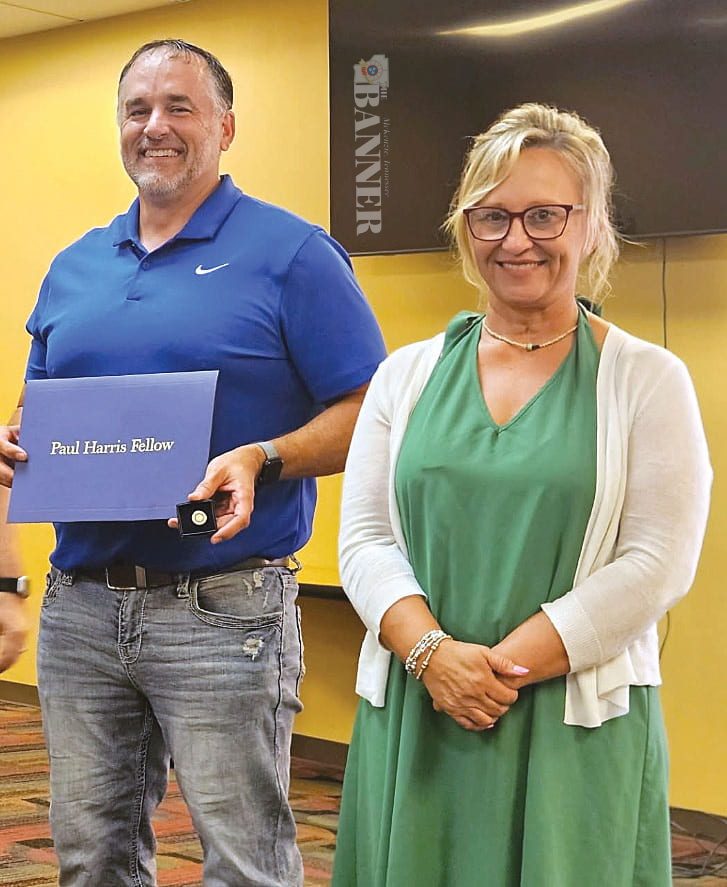
McKENZIE — Matt Aird was recently recognized as a Paul Harris Fellow, the highest recognition bestowed by a Rotarian. The recognition was given in Aird’s honor by his wife, Misty Aird, who also had the honor of pinning her husband during the presentation. Club vice president and Foundation Chairman Jason R. Martin presented Aird with the Paul Harris Fellow certificate.
Sep 8, 2026