
Huntingdon Historical Society
Anita Boyd Recalls Bruceton’s ‘Golden Age’
From the Apr 21, 2026 e-Edition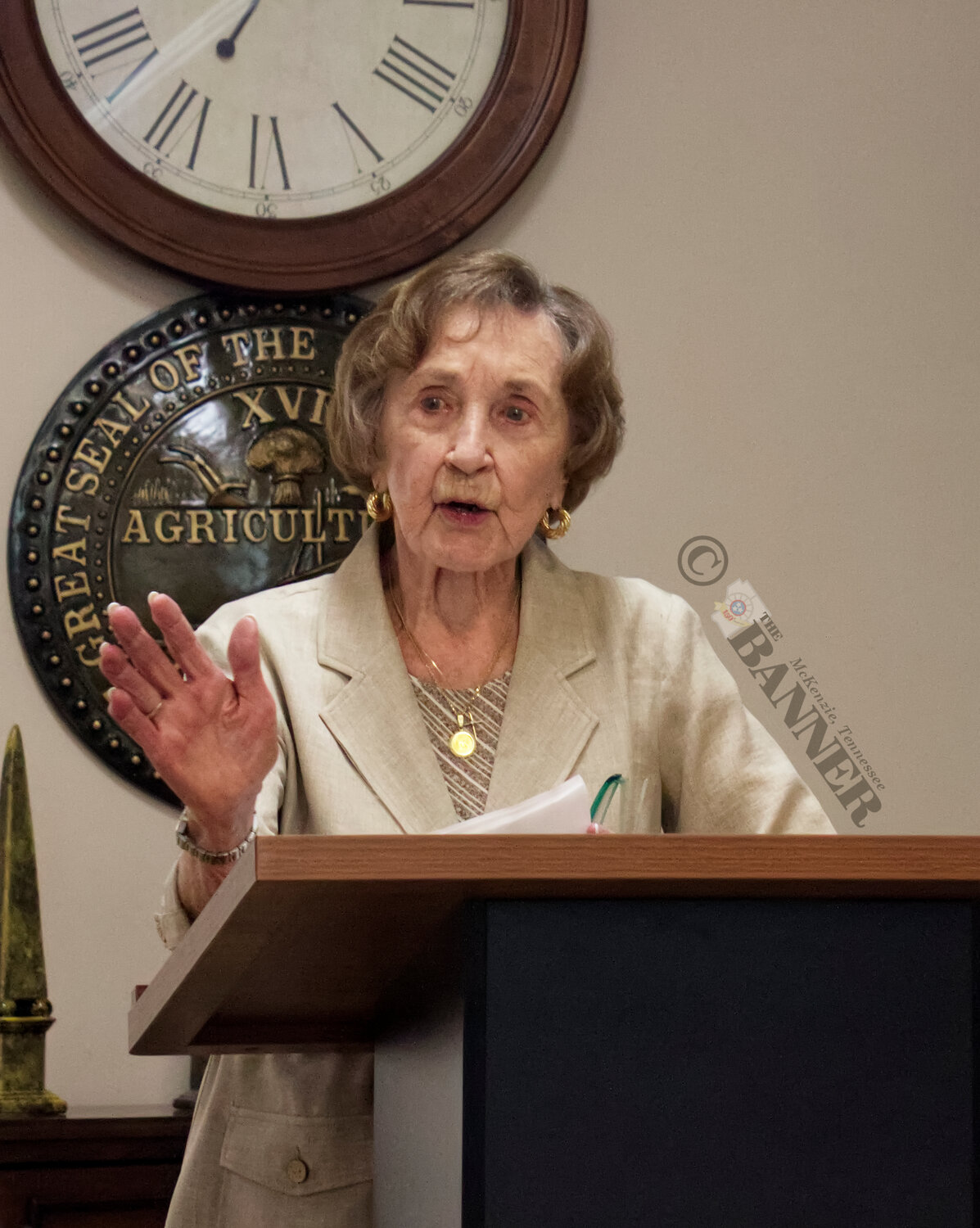
HUNTINGDON (April 15) — At just short of 97-years-old, Mrs. Anita Boyd has a long-term memory that is still as sharp as a tack. Boyd visited the Huntingdon Historical Society Wednesday morning to share some of her earlier memories, recalling what she considers to be the town of Bruceton’s golden age.
Boyd, a 1947 graduate of Bruceton High School, is on a mission to share memories of her hometown’s former glory, despite now living in Camden. She shared stories about Bruceton in the 1930s and 1940s.
“To me, that was the heyday of Bruceton, the Golden Days of Bruceton, and it was all because of the railroad,” Boyd said.
Recounting her memories, Boyd described her hometown in a way that most of its inhabitants today would think inconceivable.
Bruceton, once only known as “New One,” was a booming young town during Boyd’s youth.
It was the central hub of the Nashville, Chattanooga and St. Louis railroad, chosen to handle the traffic moving from Nashville to Memphis and from the Paducah-Hickman area to the Mississippi River.
In the span of five years, “New One” became known as “Junction City,” and then was renamed “Bruceton” for its 1925 incorporation. The town was named for W.P. Bruce, an executive on the railroad.
With four to 10 passenger trains stopping daily, Bruceton rapidly grew into a busy and flourishing small town.
“Folks from all around came to open businesses and to work on the railroad,” Boyd said.
Boyd’s family, even, relocated to Bruceton because of the railroad. Her grandfather, Herchel “Crappie” Aden moved to Bruceton from Huntingdon in 1906 to help lay the railroad tracks. He later worked as a car repairman until his retirement in 1946. Her Uncle Virgil was a brakeman and worked on the trains until his retirement.
During Boyd’s youth, Bruceton had a bank, two doctors, five churches, a telephone office, a lumber shed and a large ice plant that served both the railroad cars and the community. At one point, there were 13 stores in the downtown area alone, Boyd said.
There was also a cotton gin, a dry cleaning shop, four gas service stations with mechanics on duty, a telephone business office, two grocery stores, a dry goods store, a Western auto store, a trolley car cafe, the Dugout, a basement restaurant with rental rooms on the upper floor, a wholesale house, a blacksmith shop, a skating rink and a funeral home.
And, Boyd boasted, she can still name the owner or operator of every business she mentioned.
Bruceton even had a newspaper, called the Twin City Times. Boyd brought two newspaper copies — one from 1930 and one from 1936 — to donate to the Huntingdon Historical Society’s museum.
Boyd talked about growing up during the Great Depression, interacting with hobos as they crossed into Bruceton. Her house was on the south end of town, farthest from the railroad, but she remembers hobos walking that far to ask if they could split wood or help out in any way. Her Memea would give them leftover food, usually cold biscuits with ham or sausage.
“We had no fear of them,” said Boyd. “They were just trying to make their way in hard times.”
Boyd spoke about life in Bruceton and how the Bruceton Post Office became the “meeting place for socializing” during World War II.
“After standing in line for your turn, if you received mail, that was just the icing on the cake,” Boyd said. “Visitors to the community were always amazed at this daily vigil by so many people. Small town fellowship is not easily understood by city folks.”
Railroad employees were paid on the first and fifteenth day of each month. Boyd remembered going with her Memea to “settle up” at the grocery store or “any place that she might have charged something during the month.” They would order their home-delivered groceries from the Ralph Page grocery store on Highway 70, just a block from her house. When paying their bills, she said Page would always give her a piece of candy or a stick of gum.
“Such good memories we were making, but [we] never realized at the time how exciting it was to grow up in a small railroad town that had so much to offer,” said Boyd.
Boyd said Bruceton took a heavy blow in the 1950s. A large tornado struck, and the last of the “gasping for breath” steam engines arrived and departed.
“The war years were behind us, and folks had money, cars and the means to venture out into the big world outside of Bruceton and the other small communities throughout the nation — and that’s what we did,” Boyd said.
Bruceton’s economy took a blow with the demise of the railroad, as railroad salaries were considerably higher than most jobs in the area. Then H.I.S. closed, adding to the toll.
“The great little town that was born and flourished for 100 years or so practically died and, like a vapor, disappeared,” Boyd said. “Bruceton now is a lovely, nice, quiet, serene bedroom community with many of its citizens having no knowledge of its former glory,” Boyd said. “Such a shame to those that remember.”
Several of Boyd’s family members attended the Wednesday meeting, including 8-year-old Samuel DeVille, to hear Boyd’s presentation.
More Photos & Video
In the e-Edition
McKenzie Banner April 21, 2026
Apr 21, 2026 · Read the full issue →
Related Stories
Glow Walk to Bring Awareness, Prevention of Suicide
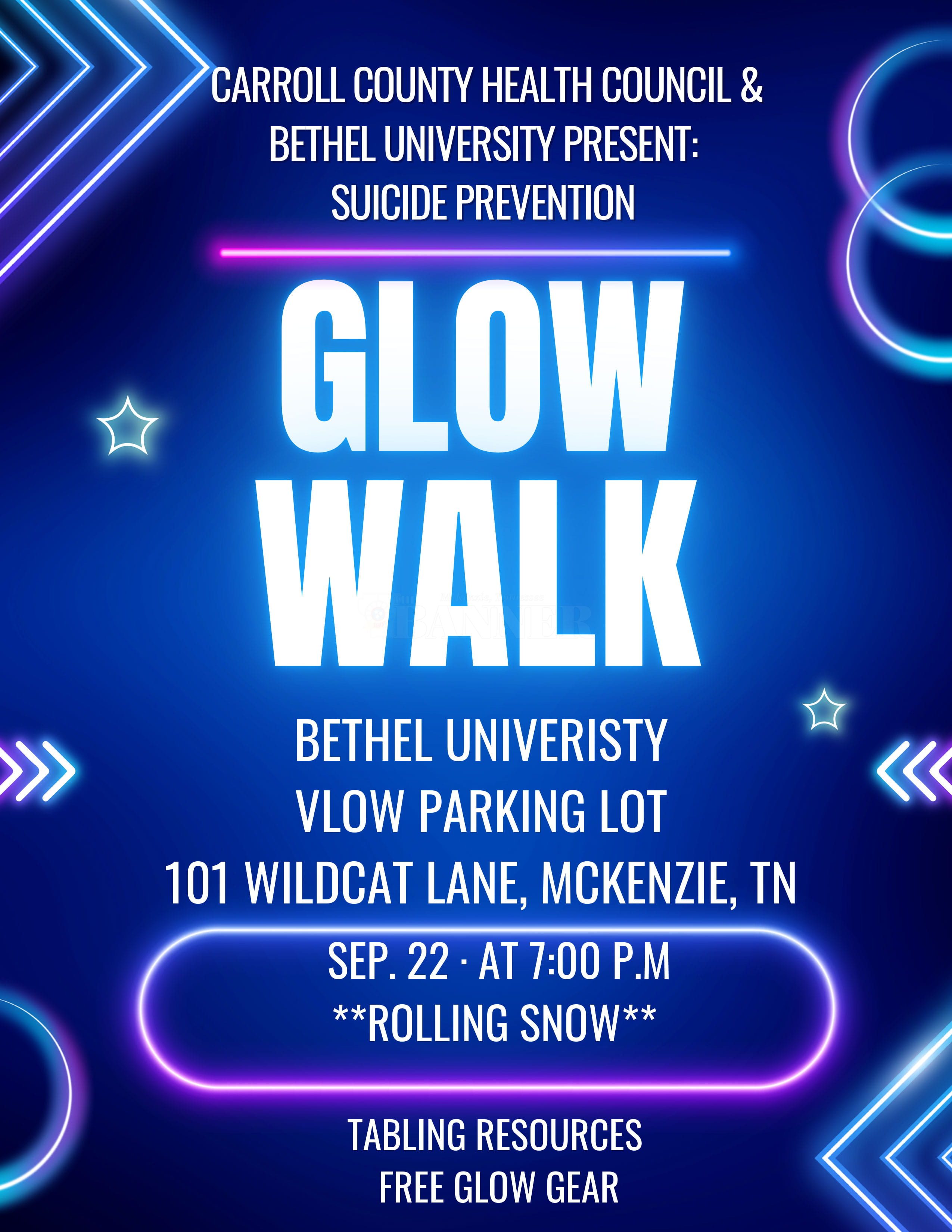
McKENZIE, Tenn — The Carroll County Health Council, in partnership with Bethel University, will host a Suicide Prevention Glow Walk on Tuesday, Sept. 22, at 7 p.m. to raise awareness and bring community members together in support of suicide prevention.
Sep 13, 2026

Cash Express Honors McKenzie’s First Responders
McKENZIE (September 11) — On Friday, Cash Express honored McKenzie Police (MPD), McKenzie Fire & Rescue (MFD), and Baptist-Carroll County Ambulance first responders with cakes decorated with the American flag and cards signed by McKenzie businesses thanking them for their…
Sep 11, 2026
Paris Landing Arts and Crafts Festival is September 12-13
The 26th annual Paris Lakeway Kiwanis Club Arts and Crafts Festival at Paris Landing State Park features over 115 local and regional crafters displaying and selling their handmade and hand-crafted items. The setting at Paris Landing State Park provides visitors with great views while shopping. There will also be food and beverage vendors, as well as a petting zoo. Admission and parking are free.
Sep 8, 2026
Wallace and Company Delights Crowd at Park Theatre
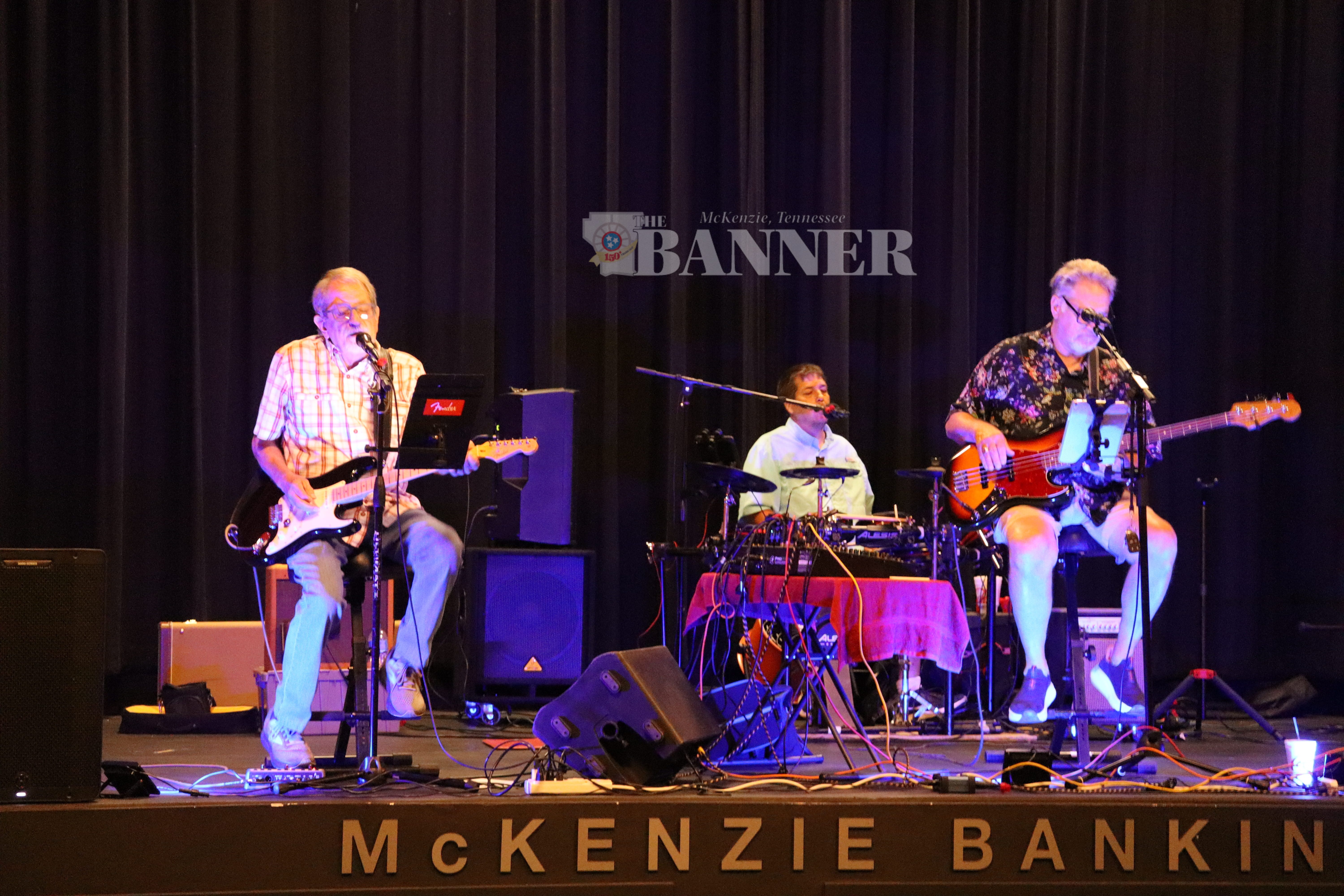
McKENZIE (September 3) — The Nights on Broadway concert series relocated inside the historic Park Theatre to beat the heat on Thursday. Wallace and Company delighted the crowd with a mix of classic rock and country music on the McKenzie Banking Company stage. Audience members…
Sep 8, 2026