

New Legislation Threatens Underperforming Virtual Schools with Closures
From the Apr 21, 2026 e-EditionNASHVILLE — Virtual schools are a major topic in Tennessee’s current legislative session. While the bill targeting South Carroll Special School District’s virtual school funding has made little movement in Nashville, one bill directed at underperforming virtual schools has made significant progress in both the House and Senate.
HB2420/SB2441, sponsored by Rep. Mark White (R-Memphis) and Sen. Bill Powers (R-Clarksville), will hold underperforming virtual schools accountable by requiring their closure.
Under current state law, the Commissioner of Education may only advise a school’s closure if the school performed a Level 1 on the Tennessee Value-Added Assessment System (TVAAS) or landed on the priority list. In calculating a TVAAS score, a student’s performance is compared to the performance of his or her peers who performed similarly on past assessments.
The new bill also prohibits a nonprofit or for-profit provider from contracting to operate or manage a new virtual school in Tennessee for a period of five years if a virtual school operated or managed by the provider is closed due to the virtual school’s previous poor academic performance.
The original bill language indicated immediate closure upon receiving a Level 1 or priority list placement. The House and Senate adopted an amendment, compromising that any type of closure will be staved off for three years. If a virtual school is on the priority list or Level 1, it has three additional years to get off the list or grow to Level 2.
The Senate passed the amended bill on April 16 with bipartisan support from 27 Senators, including Sen. John Stevens (R-Huntingdon). The House moved to substitute and conform to the Senate Bill on April 13, in a vote of 69 ayes, 21 noes and two no-votes. Rep. Brock Martin (R-Huntingdon) voted in favor of the substitution, while Rep. Tandy Darby (R-Greenfield) voted no.
Education Instruction Subcommittee Chairman Rep. Scott Cepicky (R-Culleoka), co-chairman of the bill, spoke about the piece of legislation in an interview on the TNFirefly Podcast.
Of Tennessee’s 65 virtual schools, 49 were created in the past five years, according to Rep. Scott Cepicky.
“The problem with a lot of our virtual schools is they’re Level 1 or they’re on the priority list of being in the bottom five in the state of Tennessee,” Cepicky said.
He referred to virtual schools as the “most riskiest” delivery method of education to students.
To hold the schools accountable, he supported HB2420/SB2441’s method of closing schools if they hold a TVAAS Level 1 or priority listing for three years.
According to Cepicky, this bill does not seek to eliminate virtual schools; it holds the schools to a higher accountability standard than before.
Stacy Stuppy, executive director of Volunteer State Virtual Academy (VSVA) in Lewis County, spoke in opposition of the bill during a subcommittee meeting March 24.
“Schools should absolutely be responsible for student outcomes,” Stuppy said. “However, the original bill raises concerns about how accountability timelines intersect with the realities of school improvement — particularly for new schools.”
VSVA is in its third year of operation, and its middle and high school programs landed on the TVAAS priority list for the academy’s first two years. Under the proposed bill, the academy would be up for closure soon.
However, Stuppy said VSVA’s placement on the priority list is not a good depiction of student output.
The middle school’s designation was based on only two years of data. The first year, she admitted, resulted in poor student performance. The second year, the school implemented stronger systems to track and keep up with students, resulting in improved performance. She said the second year of data alone would not have placed VSVA on the priority list, but the average of the first and second years’ scores did.
“Priority designation in Tennessee exists so that the state can provide schools with targeted support, resources and time to implement improvement strategies and demonstrate progress,” Stuppy said.
But she doesn’t feel like virtual schools are given enough space to improve under this legislation.
While brick-and-mortar schools are given two full cycles — six total years — to improve, virtual schools are only given one cycle under this bill. Stuppy asked for virtual schools to receive two full cycles as well.
“Accountability should ensure improvement — not prevent it,” Stuppy said.
Cepicky countered Stuppy’s argument during the subcommittee meeting.
“To say that virtual schools are treated the same as brick and mortar or charters is not a true statement,” Cepicky said.
Unlike charter schools, virtual schools do not undergo a rigorous application or approval process by the state, face enhanced financial oversight or ongoing evaluations or have fixed contract terms or a renewal process.
Rep. Sam McKenzie (D-Knoxville) also voiced opposition to the bill during a House Floor Session on April 13.
McKenzie’s primary concern was that virtual schools will begin selecting students based on test scores in order to stay in business, leaving lower-performing students behind.
“How can we work to make sure that all of our kids are getting the education that they need?” McKenzie asked.
Students opt to attend virtual school for various reasons. Dr. Norris shared with The Banner in January that one Clarksburg Virtual Academy student was homebound, having enrolled in the virtual academy after receiving brain surgery. Another chose to do virtual school every day from 2:30 to 8:30 a.m. before taking her mother to receive chemotherapy treatments.
“For many students with unique circumstances, virtual learning is not just an alternative; it is the best fit for their educational success,” Norris said.
Norris does not foresee this piece of legislation affecting South Carroll’s virtual schools.
“Clarksburg Virtual Academy is structured with a different approach and strong support systems in place,” Norris said. “We currently operate six testing sites across Tennessee and are committed to providing students with the tools they need to succeed. Parents have access to monitor their child’s progress in real time, allowing for greater transparency and engagement. In addition, many students are supported by a case manager who regularly communicates with both the student and family, offering guidance and sharing best practices for successful online learning.”
During the K-12 Education Subcommittee meeting on March 24, Cepicky noted that South Carroll’s first-year performance was already showing promising results compared to some longer-established programs.
“This reinforces that a new model, when implemented with intention and support, can be effective,” said Dr. Lisa Norris, South Carroll director of schools and Clarksburg Virtual Academy principal.
The Senate has already passed SB2441, but the House has yet to pass HB2420 — SB2441’s corresponding bill.
Another virtual school bill, HB2388/SB2188, targets South Carroll Special School District’s virtual school funding. The bill has not yet been heard by the House.

In the e-Edition
McKenzie Banner April 21, 2026
Apr 21, 2026 · Read the full issue →
Related Stories
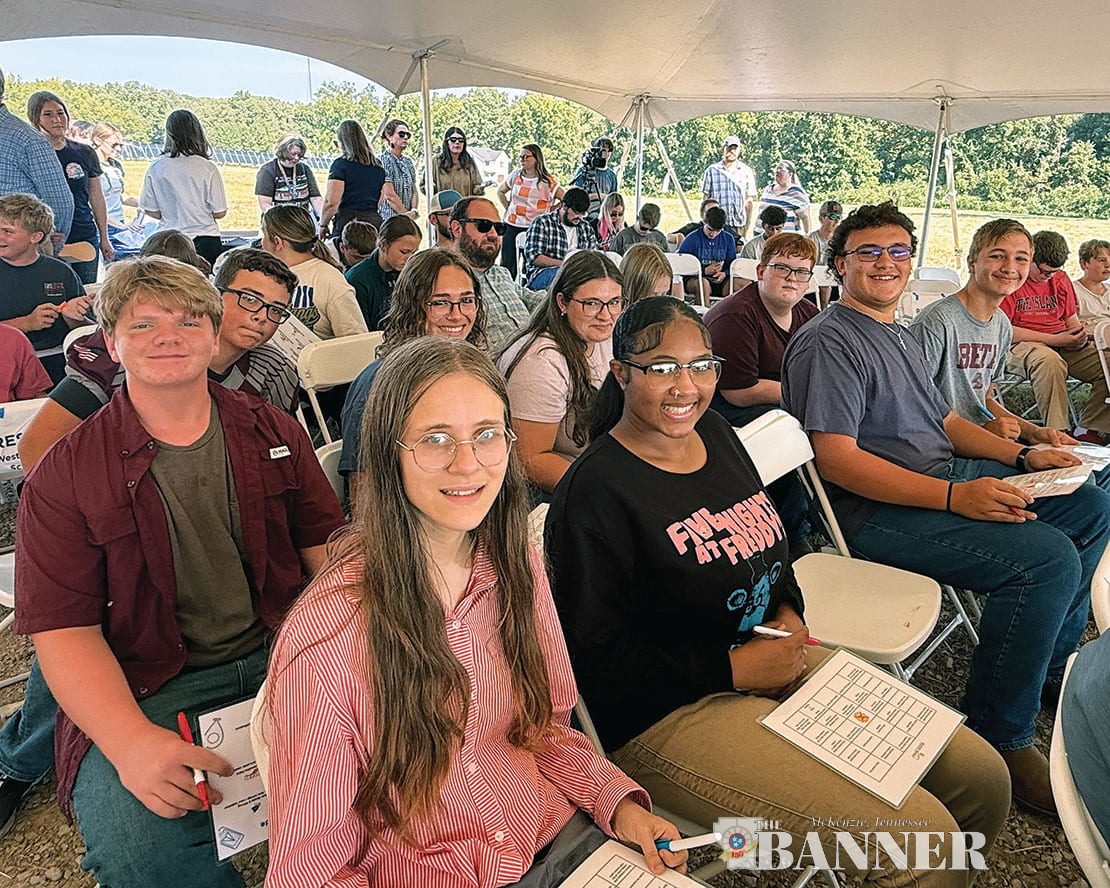
West Carroll Students Attend "Flip the Switch" at Solar Farm
West Carroll students had the opportunity to be part of an exciting moment for our local community this week as they attended the Trezevant Solar Farm “Flip the Switch” event!
Sep 13, 2026

Cash Express Honors McKenzie’s First Responders
McKENZIE (September 11) — On Friday, Cash Express honored McKenzie Police (MPD), McKenzie Fire & Rescue (MFD), and Baptist-Carroll County Ambulance first responders with cakes decorated with the American flag and cards signed by McKenzie businesses thanking them for their…
Sep 11, 2026
Trezevant Solar Farm Flip-the-Switch Event Happening Now
Carroll County Electric Department (CCED) and Tennessee-based Silicon Ranch , owner and operator of one of the nation’s largest fleets of solar facilities and a community-focused energy infrastructure company, invite you to attend a “Flip-the-Switch” ceremony for the new…
Sep 10, 2026
McKenzie Council to Consider Planning Commission Appointments
McKENZIE — The McKenzie City Council will meet Thursday, September 10, at 6 p.m. with a Tennessee Volunteer Firefighter Equipment and Training Grant and two appointments to the McKenzie Planning Commission among the items on the agenda.
Sep 8, 2026