
McKenzie School Board Hears Good News of Unexpected State Revenue
From the Jan 6, 2026 e-Edition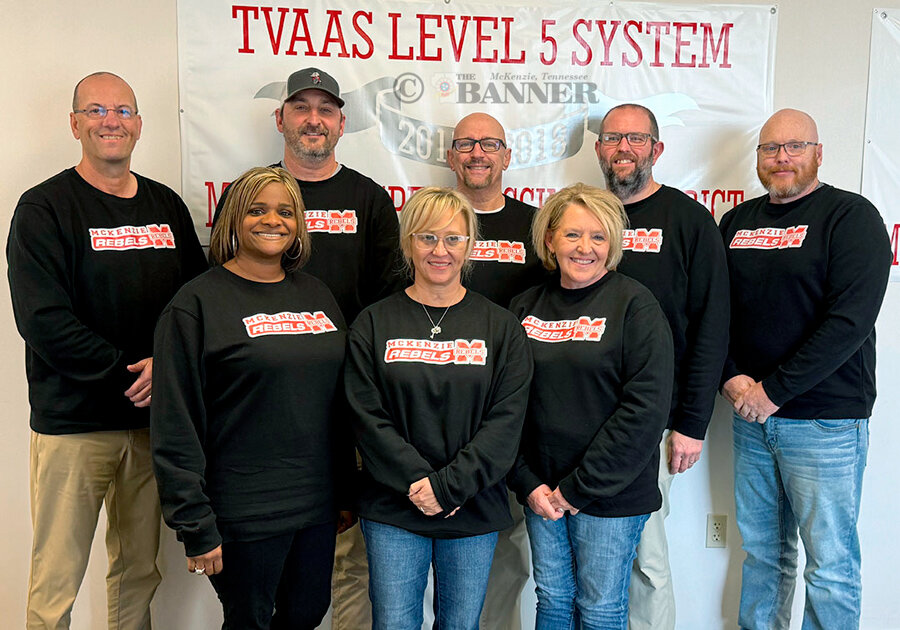
McKENZIE (January 3) — McKenzie Special School District Board of Education received some unexpected good news as it relates to state revenues. During a budget workshop on Saturday, January 3, board members were informed the school district may receive as much as $600,000 extra from the State of Tennessee over anticipated receipts. Finance Director Brad Davis said the district was notified of the first installment.
That’s good news for the district as the board prepares for the 2026-27 budget that begins in July. However, if a tax increase is necessary, the Tennessee General Assembly must first approve the rate increase.
Given the current financial uncertainties, the board is advised to take proactive steps to ensure future flexibility. The primary recommendation is to hold a vote in February to amend the district’s private act. This legislative change would raise the district’s tax rate ceiling from its current level, providing the authority to implement a tax increase if it becomes necessary in the future. The last time this was done was in 2005, when the ceiling was raised to $2.00, though the increase was not enacted at that time.
It was strongly emphasized that this is a contingency measure, not a decision to raise taxes. If the projected $600,000 in new CTE funding is confirmed, a tax increase would not be utilized for the upcoming budget year, and the rate would remain at its current level. This approach provides a crucial safety net should the new funding not materialize or if other unforeseen deficits arise, while allowing the board to remain fiscally conservative if the financial outlook improves as hoped. The board was encouraged to make a decision in February to provide sufficient time for state legislators to act during the current session.
Unexpected Revenue and Its Impact on a Potential Tax Increase
A recent and significant development has altered the district’s financial outlook. An email received from the State Department during the holiday break announced new “fast growth” funds generated by strategic changes to Career and Technical Education (CTE) coding at the middle school. The district has already received an initial payment of $192,000, representing 40% of the initial allocation.
If these figures hold true, the district projects it could generate an additional $600,000 in TISA (Tennessee Investment in Student Achievement) funds annually. This unexpected revenue stream would likely eliminate the need for a proposed tax increase. However, leadership is exercising caution, as the figures are still preliminary. While a quick internal check suggests the numbers are correct, the funds are contingent on the accuracy of the underlying data, which the state could retract if errors are found. A clearer financial picture will emerge in March with the first official allocation notice for the next fiscal year. Leadership plans to conduct a deeper analysis of the data in the coming weeks.
This new revenue is distinct from the fast growth funds received last year, which were based on an increase in student enrollment. This year’s funding is directly tied to the district’s successful efforts to re-code courses and structure new opportunities for students. The state awards more funding for career and technical education (CTE) courses in the middle and high schools.
Before the news of potential CTE funding, the district faced a significant budget deficit, driven by a confluence of rising costs, which painted a clear picture of the need for increased revenue.
Director Barden, and supervisors Leighann Horne and Ladona Herrin provided insights about the enhancements in education, changes in funding and the effect of inflation on the cost of education. These escalating expenditures stem from several key areas:
• Mandated Salary Increases: The state’s push to raise teachers’ base salaries to $50,000, up from the district’s current $48,000, creates a “cascading effect,” said Dr. Justin Barden, director of schools. This requires raising pay across the entire salary schedule to maintain equitable steps for experienced educators, a cost not fully covered by state TISA increases, which have been a modest $295 per student annually and do not account for inflation.
• Special Education Expansion: Since 2017-18, the district has absorbed a nearly half-million-dollar increase in special education costs. This is a direct result of taking on services and students, including those in Comprehensive Development Classes (CDC), previously facilitated by the Carroll County Learning Center in Huntingdon.
• Expiration of Grant Funding: Positions and expenses previously paid for by expiring COVID-era ESSER grants and other grants (such as the IDEA grant) must now be absorbed into the general-purpose budget. This includes specialized staff salaries that the district deems essential to maintain.
• Operational and Programmatic Costs: The budget has been strained by a variety of other factors, including:
▶ A $44,000 loss in federal Title V funds due to a slight decrease in the community’s poverty rate to 19.6%. A rate of 20 percent poverty would generate additional funding. The good news is McKenzie fell below the 20 percent threshold. However, that adversely affects the school district’s budget.
▶ An anticipated $86,000-$87,000 increase in salary costs next year due to a high number of staff members completing advanced degrees. Teachers continue to add advanced degrees, which also generates them a higher salary.
▶ Rising costs for utilities, contract services, and technology, including the cyclical replacement of student computer Chromebooks. During COVID, federal funds were provided to purchase those laptops. Now, it’s up to the school district to maintain and replace those as needed.
▶ A significant increase in textbook costs, now nearing $200,000 in an adoption year, due to publishers shifting to expensive consumable workbooks and digital bundles as compared to the previous hardbound books used by students on a multi-year basis.
• External Revenue Threat: The district faces a potential loss of $126,000 in local sales tax revenue due to South Carroll School District’s new academic program. The academy serves students statewide as the virtual school adds to its student count and competes with other local in-county school districts for the distribution of local sales tax revenues. Sales taxes collected anywhere in Carroll County are allocated to local school districts based on its average number of enrolled students. The issue is being raised with state legislators, as it negatively impacts the county’s other school systems.
The Strategic Growth and Financial Impact of Special Education
A primary driver of the district’s budget growth has been the need to expand its special education program. This transformation began in 2018 when the Special Learning Center in Huntington closed, requiring the district to build its own programs from the ground up to serve its students, including those with profound disabilities.
The district established Comprehensive Development Classrooms (CDC) in every school and expanded its preschool services with a Virtual Pre-K program and a “619” preschool class for students with disabilities, who are served starting at age three. Today, the district serves 248 students for academic special education needs—more than most neighboring districts—with approximately 22% of the total student population having a disability of some kind (a figure that includes speech-only and intellectually gifted students).
This growth has necessitated significant financial investment:
• Staffing: The district hired special education teachers, assistants, and two full-time Speech-Language Pathologists (SLPs). Aide pay has increased from approximately $12,000 to $17,000-$18,000 annually to remain competitive.
• Services: Costs include contracts for specialized psychological (IQ) testing, occupational and physical therapy, and homebound instruction for medically fragile students. Testing costs alone have recently run about $5,000 per month.
• Infrastructure: A sensory room was built at the elementary school, and specialized work-based learning labs, such as a coffee shop, were created at the high school, largely funded by grants that are now expiring. The coffee shop and other career-oriented programs are available to special education students.
The special education budget has grown by 81% to meet the increasingly complex academic, behavioral, and mental health needs of students, which reflects a trend seen across the state.
The expiration of over $3 million in federal ESSER (Elementary and Secondary School Emergency Relief) funds has created a significant financial cliff. While the funds allowed for critical investments such as HVAC upgrades, technology, and additional staff, the district must now absorb recurring costs from its general fund.
Key positions originally funded by ESSER are now permanent budget items. This includes an additional Speech-Language Pathologist (SLP), Ms. Jill Scott, who was hired to help manage a district-wide caseload of over 110 students. The district also added another English Language Learner (ELL) teacher to serve its 31 ELL students, a population that requires legally mandated service hours and has grown with the arrival of “newcomer” students. These non-English-speaking students have never attended school in the States.
Furthermore, ESSER funds helped manage costs that have since become permanent and escalating budget lines:
• Technology: The one-to-one Chromebook program, initiated during the pandemic, requires an ongoing budget for cyclical replacement as devices age.
• Textbooks: Publishers have shifted from durable, hardback books to consumable workbooks and bundled digital licenses. This has dramatically increased costs, as materials must be repurchased annually for every student rather than used over a multi-year cycle. The state’s extension of the adoption cycle from six to eight years also forces the district to make expensive “gap” purchases to cover the interim. The district has joined a statewide lawsuit against major publishers for alleged overcharging.
In contrast, the district has been proactive in generating new revenue through Career and Technical Education (CTE). By strategically re-coding existing middle school courses like computers, STEM, and career exploration from general education (“G-codes”) to CTE (“C-codes”), the district can draw down significant additional state funding without altering the core instruction. This strategy, made possible by a $1.5 million ISM grant that helped build programs and fund key positions, is now proving to be self-sustaining. The district’s CTE funding from the state’s TISA base already grew from $400,000 to $600,000 this year, and the newly announced funds will add to that. This approach not only provides a vital revenue stream but also enhances opportunities for students, with programs like cybersecurity now offering dual credit and TCAT-ready certifications upon high school graduation.
The primary recommendation is to hold a vote in February, requesting the General Assembly to amend the district’s private act. This legislative change would provide the authority to implement a tax increase if it becomes necessary in the future. The last time this was done was in 2005, when the ceiling was raised but not enacted at that time.
In the e-Edition
McKenzie Banner January 6, 2026
Jan 6, 2026 · Read the full issue →
Related Stories
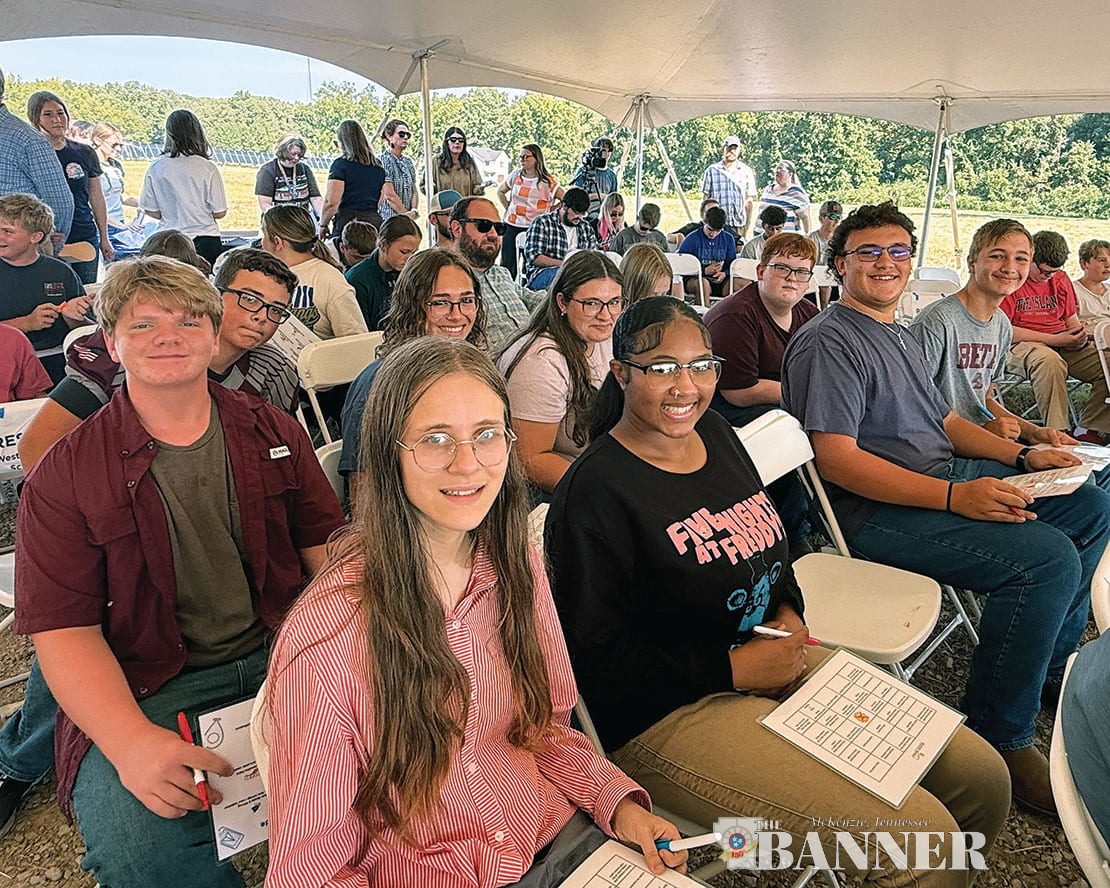
West Carroll Students Attend "Flip the Switch" at Solar Farm
West Carroll students had the opportunity to be part of an exciting moment for our local community this week as they attended the Trezevant Solar Farm “Flip the Switch” event!
Sep 13, 2026

Glow Walk to Bring Awareness, Prevention of Suicide
McKENZIE, Tenn — The Carroll County Health Council, in partnership with Bethel University, will host a Suicide Prevention Glow Walk on Tuesday, Sept. 22, at 7 p.m. to raise awareness and bring community members together in support of suicide prevention.
Sep 13, 2026

Cash Express Honors McKenzie’s First Responders
McKENZIE (September 11) — On Friday, Cash Express honored McKenzie Police (MPD), McKenzie Fire & Rescue (MFD), and Baptist-Carroll County Ambulance first responders with cakes decorated with the American flag and cards signed by McKenzie businesses thanking them for their…
Sep 11, 2026
Trezevant Solar Farm Flip-the-Switch Event Happening Now
Carroll County Electric Department (CCED) and Tennessee-based Silicon Ranch , owner and operator of one of the nation’s largest fleets of solar facilities and a community-focused energy infrastructure company, invite you to attend a “Flip-the-Switch” ceremony for the new…
Sep 10, 2026