

Bethel President Moulds Gives Update to McKenzie Rotary
From the Nov 4, 2025 e-Edition
McKENZIE (October 28) — Bethel University President Perry Moulds addressed the McKenzie Rotary Club, offering an inside look at the university’s current status and future direction. He began by outlining significant challenges in higher education nationwide, including the “demographic cliff,” intensified competition for students, and growing demand for clear workforce outcomes. He then detailed Bethel’s proactive responses, such as adopting a new provost-led administrative structure, returning to financial stability after a challenging year in 2023-24, and launching a new strategic planning process. He presented Bethel’s value proposition to prospective students—highlighting affordability versus other private universities, a personalized 15-to-1 student-faculty ratio, robust student support services, and vibrant campus life. He concluded with a call to action, inviting the community to engage with the university by attending upcoming homecoming and athletic events to support students.
Dr. Moulds has served as Bethel’s president for approximately 1.5 years and succeeded Dr. Walter Butler.
Moulds related Bethel’s new initiatives plus challenges of the university.
“The “demographic cliff” is impacting universities; lower birth rates during the 2008–2010 housing crisis have reduced the pool of college-aged students. Tennessee is one of only five states in the U.S. that are actually predicted to increase in the number of college-going students. It’s predicted that Tennessee will increase by 15 percent by 2041. Now, 2041 seems like it is a long way away. It really isn’t. But Tennessee is at a growth point, while much of the remainder of the country is in decline,” said Moulds.
He noted education delivery has shifted drastically. About five major universities dominate online education, yet it remains necessary for all institutions to serve working adults and students with families.
Artificial Intelligence (AI) presents new challenges, requiring universities to teach students how to use it as a research tool while preventing plagiarism and ensuring deep learning.
Workforce development is emphasized, with universities judged on graduate employment rates and salaries—a metric that can devalue essential but lower-paying professions like teaching and social work.
Tennessee’s Unique Position
Tennessee is one of only five states projected to see an increase in college-going students, with a predicted 15 percent growth by 2041.
This growth makes Tennessee students prime targets for aggressive out-of-state recruitment.
Overall population growth in Tennessee, including Carroll County, presents opportunities for Bethel to recruit more students and families.
This year, the university implemented a provost model for the first time. Dr. Joe Hames is the inaugural interim provost, overseeing all academic and student life areas to foster a “One Bethel” approach.
New deans: Dr. Wayne Scott leads the College of Professional Studies (online programs); Dr. Keith Herris is Dean of the College of Arts and Sciences (CAS); and Dr. Delicia Parker is Dean of the College of Health Sciences (CHS).
CAS and CHS deans share an office to promote collaboration on innovative degree and certificate programs.
Lougan Bishop was hired as Vice President for Enrollment and Engagement, leading a revitalized marketing team.
A search for a Vice President for Athletics will conclude within the next couple of weeks. Dave McCulley is presently filling that position.
Financial Stability and Growth
After ending the fiscal year on July 31, 2024, with a significant loss, the university balanced its budget in the most recent fiscal year ending July 31, 2025.
Growth in student enrollment, online programs, and program offerings is a key priority — “standing still is not an option,” said the president.
“I’m very proud to tell you that we finished this past fiscal year a significant balance to our budgets, a lot of very hard work for people and the university to make that happen. But financial stability is absolutely critical for any institution of higher education. So is growth. Growth in the number of students we host on our campus, in our online programs, and in the types of programs we offer is really important,” said Dr. Moulds.
New Strategic Plan
A strategic planning process is launching to define direction through 2030.
Input from internal (campus) and external (community) stakeholders will ensure programs meet regional needs and produce hirable graduates.
“Because the greatest risk a university can take is to keep doing the same thing that it has always been doing. Standing still is not an option. As we go through the rest of this semester and into the spring, we are undertaking a new strategic planning process. The entire campus will be involved, and many of you will be, too. We are asking not just our internal stakeholders, but our external stakeholders, to give input into the direction of where we’re going to go by 2030 as a university.”
Total enrollment is nearly 3,000 students, including just under 1,000 on-campus undergraduates, as well as online and dual-enrollment students.
Dual enrollment includes high school students in the local geographic area plus over 200 students at Smyrna High School in middle Tennessee.
Bethel offers a personalized environment with a 15-to-1 student-faculty ratio and an average class size of 16.
Students come from 33 states and 41 countries.
Bethel’s home campus in McKenzie provides access to Memphis and Nashville for internships and recruitment.
Educational offerings include 42 majors and programs, one-to-one academic advising, tutoring in 25 subjects, and career services at the Burroughs Learning Center.
A robust Global Studies program offers trips to Costa Rica, Japan, Colombia, Mexico, France, and Italy, open to the entire community.
Student Life, Well-being, and Christian Identity
Campus life is vibrant, with 30-plus events per month, 20-plus student organizations, and 14 fraternities and sororities.
Strong focus on well-being: on-campus health clinic, disability services, counseling, and Title IX support addressing the student mental health crisis.
Bethel is “unapologetically Christian,” affiliated with the Cumberland Presbyterian Church, welcoming all faiths while requiring chapel for first-year students.
Approximately 70 percent of undergraduates are student-athletes across 21 teams.
Athletics have earned the NAIA Champions of Character five-star award for ten consecutive years and boast 23 national champions. Bethel’s Lady Wildcats Basketball Team is ranked second in the nation in NAIA.
The Renaissance performing arts program includes 100-plus students in nine groups, delivering 100-plus performances annually, including “Christmas with Renaissance” and the upcoming musical “Newsies” at the Dixie Performing Arts Center.
Annual tuition and fees are $29,500, which is significantly more affordable than the private university national average of $58,600.
Academic scholarships range from $4,000 to $12,000 and are awarded based on criteria such as a 3.0 GPA or a 20 on the ACT.
Additional aid includes the full-tuition Hendricks Scholarship, plus athletic and Renaissance scholarships.
The university is actively marketing its value, including a new billboard in Nashville.
Community members are encouraged to participate in university life actively—attend athletic events and performances to cheer on and support students, helping them feel at home in McKenzie.

In the e-Edition
McKenzie Banner November 4, 2025 + Manufacturing 2025
Nov 4, 2025 · Read the full issue →
Related Stories
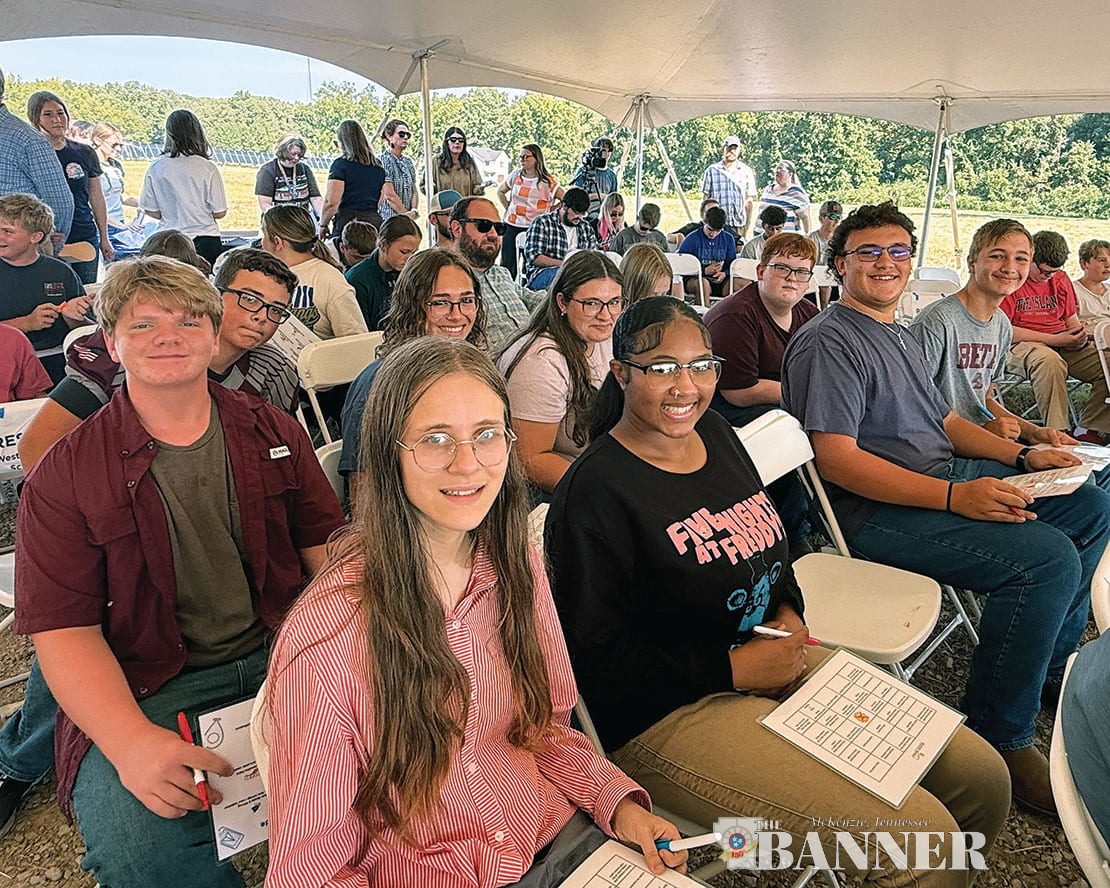
West Carroll Students Attend "Flip the Switch" at Solar Farm
West Carroll students had the opportunity to be part of an exciting moment for our local community this week as they attended the Trezevant Solar Farm “Flip the Switch” event!
Sep 13, 2026

Glow Walk to Bring Awareness, Prevention of Suicide
McKENZIE, Tenn — The Carroll County Health Council, in partnership with Bethel University, will host a Suicide Prevention Glow Walk on Tuesday, Sept. 22, at 7 p.m. to raise awareness and bring community members together in support of suicide prevention.
Sep 13, 2026

Cash Express Honors McKenzie’s First Responders
McKENZIE (September 11) — On Friday, Cash Express honored McKenzie Police (MPD), McKenzie Fire & Rescue (MFD), and Baptist-Carroll County Ambulance first responders with cakes decorated with the American flag and cards signed by McKenzie businesses thanking them for their…
Sep 11, 2026
Trezevant Solar Farm Flip-the-Switch Event Happening Now
Carroll County Electric Department (CCED) and Tennessee-based Silicon Ranch , owner and operator of one of the nation’s largest fleets of solar facilities and a community-focused energy infrastructure company, invite you to attend a “Flip-the-Switch” ceremony for the new…
Sep 10, 2026