

Trezevant Board Approves New Land Use Protocol After Heated Debate
From the May 19, 2026 e-Edition
TREZEVANT (May 12) — The Trezevant Board of Mayor and Aldermen approved a new land use application process Tuesday, May 12, following a contentious meeting that saw citizens question the legality and fairness of the proposal. Mayor Bobby Blaylock, Vice Mayor Pam Joyner and aldermen Leon Lyell, Don Barger, Dan Dieringer and Mark Argo were all present for the session at the Trezevant Community Center.
The main point of discussion centered on what Alderman Dan Dieringer called a “land use application” intended to be the “initial phase” of when someone wants to start a business or begin construction on his or her property. He clarified that the application is not a permit. The document is designed to create a paper trail and give codes enforcement officer Jim Seaton written authorization and documentation to check city ordinances.
The application document requires a $50 fee, which goes toward Seaton’s pay. Seaton is paid $15 an hour for general work, including ordinance enforcement.
“The city is not making money off this application,” Dieringer said.
The application covers residential and accessory buildings, fences, deck exemptions, zoning ordinance exemptions and general business, but it excludes flea market businesses.
This exemption drew immediate criticism from concerned citizen Philip Colwell, who pointed out that flea markets are still businesses, even if they pay a separate $20 annual fee set by the county.
Colwell said that allowing out-of-town flea market vendors to pay less than a brick-and-mortar city business owner is a “slap in the taxpayer’s face.”
Dieringer dismissed the comparison, calling flea market businesses and those in the business district “apples and oranges,” but Colwell disagreed.
Citizen John Quinn, who had previously been sued by the town for operating a business out of his home without proper permits, challenged the application by presenting a copy of the Town of Trezevant’s 2007 zoning ordinance, noting that the rules do not currently require permits for accessory buildings or fences.
“Right now, there is nothing in those rules whatsoever that says you need a permit at all,” Quinn said. “So why do I have to come down to City Hall and fill out an application for something that doesn’t need a permit, spend 50 bucks and tell you what I’m gonna do on my personal property? It’s not yours, it’s mine.”
Seaton intervened to clarify the intent, explaining that the application is merely the first procedural step in updating the town’s codes.
“The next step will be to actually create the permits, because there are none in the ordinances as you pointed out,” Seaton said. “Once those permits are created and this is tied to them, an ordinance will be created updating the fact that you need permits for all this stuff involved.”
Quinn responded by accusing the board of making bureaucracy and trying to “steal money out of our pockets.” He concluded by requesting, for the second time, that the board pursue enforcement actions against all other non-compliant home occupations in town, just as they did against him.
Quinn then walked out of the meeting, calling upon Mayor Bobby Blaylock to retire.
Shortly afterward, the board voted unanimously to approve Dieringer’s permit protocol.
Later in the meeting, property maintenance became another focus when Mary Jo Hall requested the board’s support in enforcing regulations against a Trezevant property with exceptionally tall grass. She noted that previous enforcement attempts with different properties had failed in City Court.
Vice Mayor Pam Joyner affirmed the board’s commitment. “These are our constituents,” she said, “and we are responsible for helping our town and our constituents to the best of our abilities.”
Town lawyer Charlie Trotter advised the town to bypass City Court and file for Chancery Court action instead.
Seaton noted a provision that allows the town to mow the lawn and bill the owner. If the cleanup cost reaches $500, a lien can be placed against the property.
Seaton said that the board’s support was key to moving forward with the new plan. The board then unanimously voted to support the renewed enforcement effort.
The board concluded the meeting by passing a resolution to call for the November 3, 2026, Municipal Election, which will include positions for three aldermen—Joyner, Dieringer and Barger—all for four-year terms.
More Photos & Video

In the e-Edition
McKenzie Banner May 19, 2026
May 19, 2026 · Read the full issue →
Related Stories
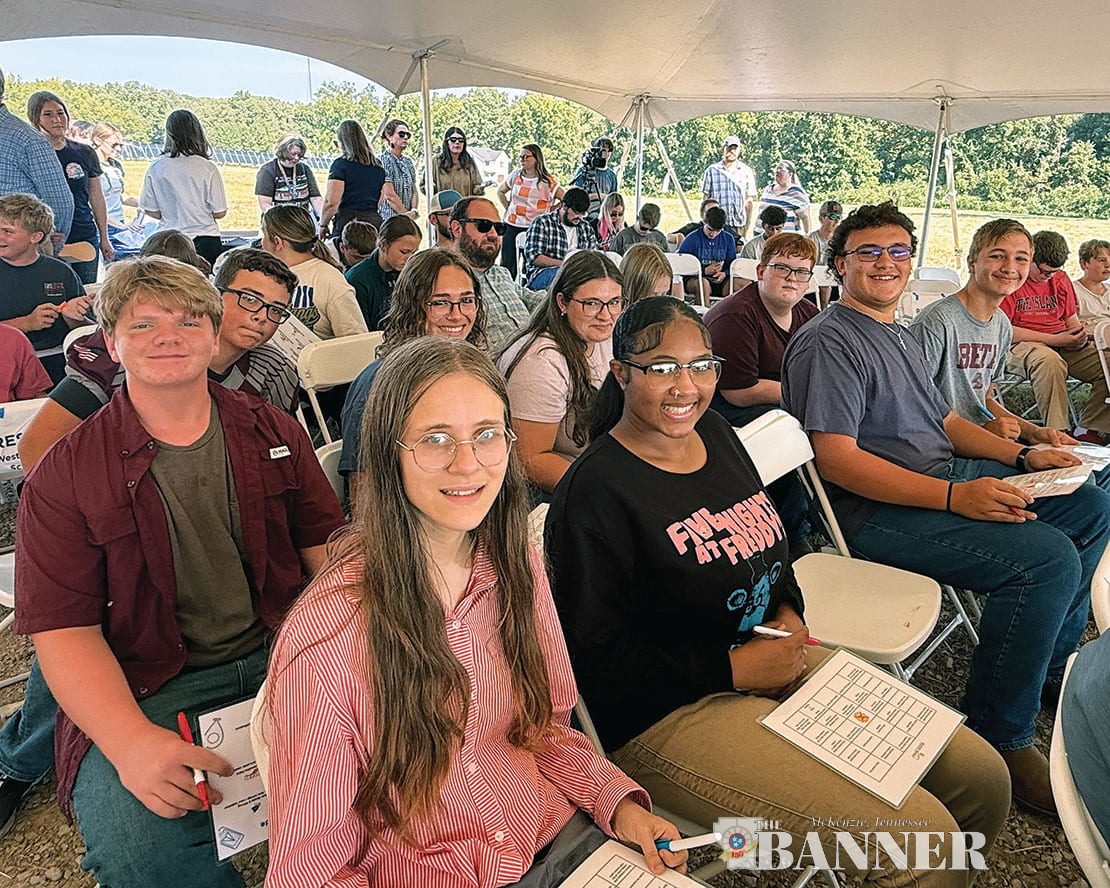
West Carroll Students Attend "Flip the Switch" at Solar Farm
West Carroll students had the opportunity to be part of an exciting moment for our local community this week as they attended the Trezevant Solar Farm “Flip the Switch” event!
Sep 13, 2026

Cash Express Honors McKenzie’s First Responders
McKENZIE (September 11) — On Friday, Cash Express honored McKenzie Police (MPD), McKenzie Fire & Rescue (MFD), and Baptist-Carroll County Ambulance first responders with cakes decorated with the American flag and cards signed by McKenzie businesses thanking them for their…
Sep 11, 2026
Trezevant Solar Farm Flip-the-Switch Event Happening Now
Carroll County Electric Department (CCED) and Tennessee-based Silicon Ranch , owner and operator of one of the nation’s largest fleets of solar facilities and a community-focused energy infrastructure company, invite you to attend a “Flip-the-Switch” ceremony for the new…
Sep 10, 2026
McKenzie Council to Consider Planning Commission Appointments
McKENZIE — The McKenzie City Council will meet Thursday, September 10, at 6 p.m. with a Tennessee Volunteer Firefighter Equipment and Training Grant and two appointments to the McKenzie Planning Commission among the items on the agenda.
Sep 8, 2026