
McKenzie Rotary Visited by Jackson Airport
From the May 19, 2026 e-Edition
McKENZIE (May 5) — The Jackson Regional Airport is no longer a "best-kept secret" — it is a booming regional hub.
Addressing the Rotary Club of McKenzie on Tuesday, Executive Director Kyle Barron detailed a period of unprecedented growth for the facility formerly known as McKellar-Sipes. Under his leadership, the airport has officially ascended to "primary airport" status, a milestone reached after surpassing 10,000 annual passengers in its first year of jet service—shattering the original two-year projection.
"We have become Tennessee’s sixth primary airport," Barron said, noting that the status jump increases annual FAA maintenance funding from $150,000 to a robust $1.3 million.
The numbers tell a story of a region eager to fly. As of late April 2026, passenger traffic has surged 62% year-over-year. Barron projected that the airport will see up to 16,000 passengers by the end of the year.
The success is anchored by Denver Air, which operates a 50-seat Embraer 145 jet. Barron highlighted the carrier’s reliability, boasting a 95% completion rate on flights to Atlanta and Chicago—significantly higher than the 80% industry average.
"It’s about convenience and reliability," Barron remarked. "Whether it's an $85 flight to Atlanta or a $115 trip to Chicago, we are offering a premium experience without the headaches of the major metros."
Success, however, has brought its own set of "good" problems. The airport is currently at 100% hangar capacity, with dozens of aircraft owners on waitlists.
To meet this demand, Barron announced several major capital projects:
- Hangar Expansion: A $10 million state grant will fund new T-hangars and community hangars, with groundbreaking expected within 12 weeks.
- Runway & Tower: $24 million has been allocated for a new runway, alongside $1 million in tower upgrades.
- Terminal Growth: Plans are underway to double the terminal's capacity. The current secure area seats only 50 people, often hitting fire code limits during peak hours.
Barron leaned heavily into the practical benefits for West Tennessee travelers, citing a Ford Motor Company time study showing that flying from Jackson saves 52 minutes compared to driving to Memphis, which is an equal driving distance to Jackson or Memphis International Airport from Ford's Stanton Tenn.-based Blue Oval.
Beyond time, the director pointed to the "wallet-friendly" nature of the local airport. "When you factor in free parking—compared to $30 a night in Nashville—and a TSA process that takes roughly 10 minutes, the choice becomes clear," Barron said.
While the flights are short, Denver Air provides full-size snacks and seamless baggage transfers through partnerships with major carriers like Delta, American, and United.
With a new fire truck budgeted for next year and a permanent parking lot expansion slated for this summer, the Jackson Regional Airport is firmly positioned as the primary gateway for the 1.5 million residents in its 21-county service area.
Mr. Barron also noted that the Tennessee National Guard operates from the MKL field and has expanded its operations there. That allows for the airport to provide more services, including a second Jet A fueling truck for use at the field to fuel both fixed-wing and rotorblade jet-powered aircraft.
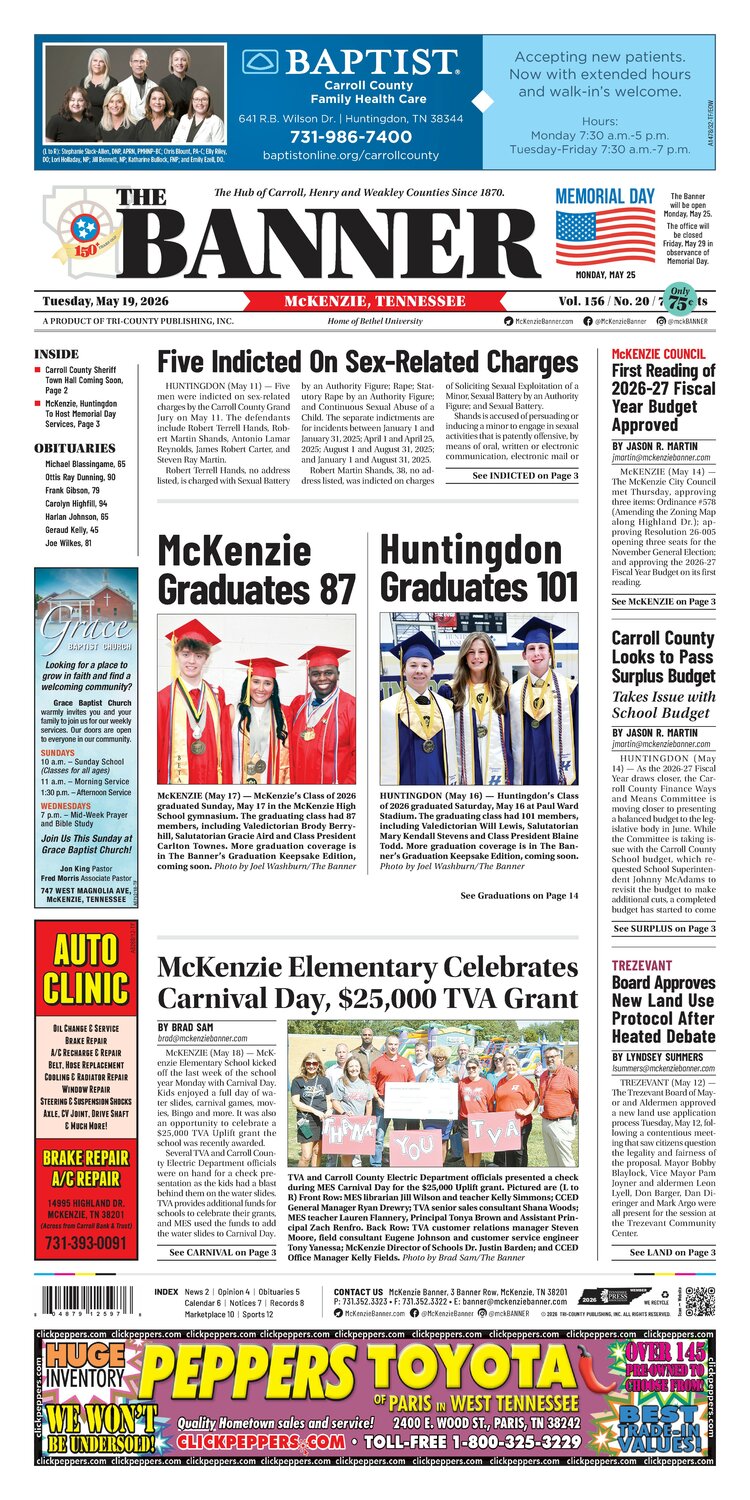
In the e-Edition
McKenzie Banner May 19, 2026
May 19, 2026 · Read the full issue →
Related Stories
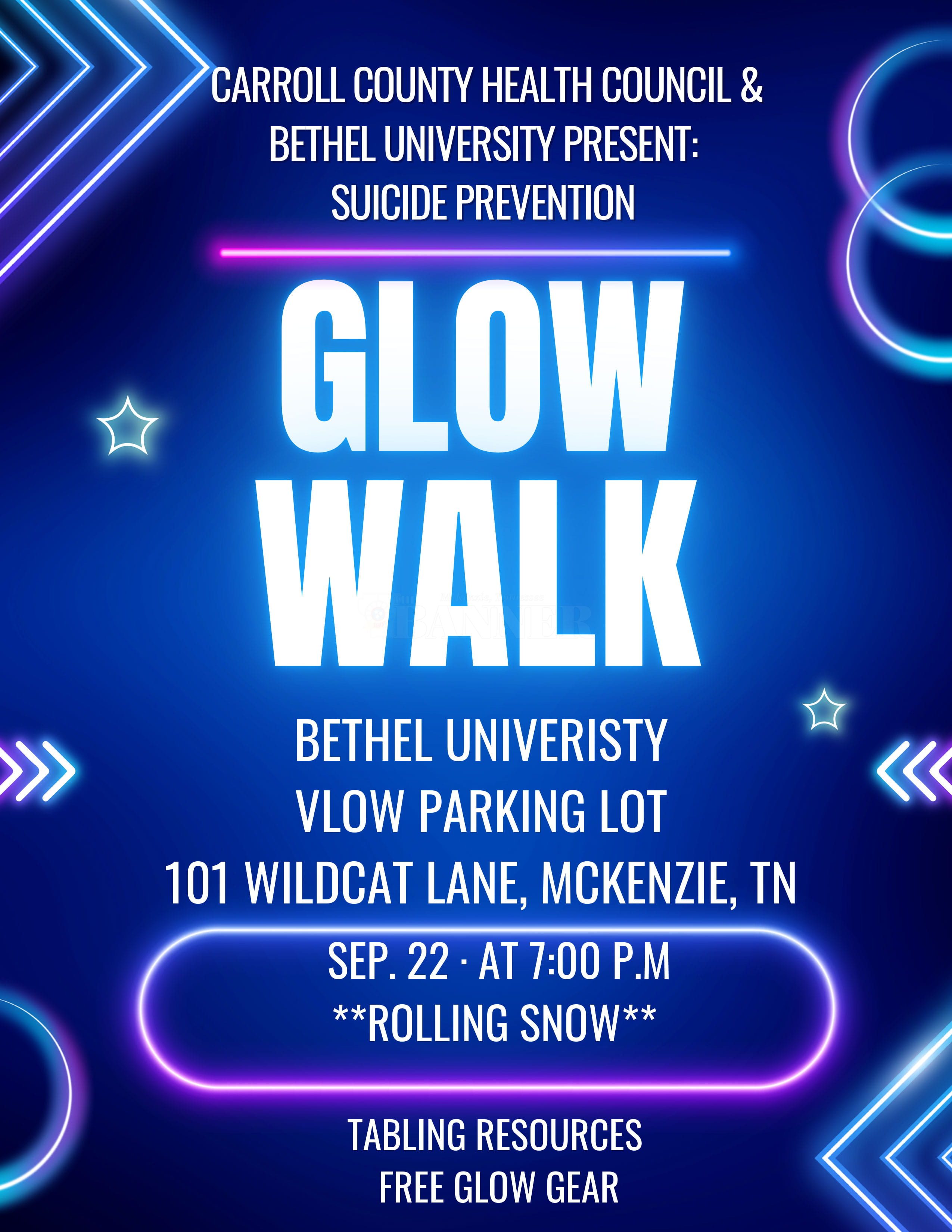
Glow Walk to Bring Awareness, Prevention of Suicide
McKENZIE, Tenn — The Carroll County Health Council, in partnership with Bethel University, will host a Suicide Prevention Glow Walk on Tuesday, Sept. 22, at 7 p.m. to raise awareness and bring community members together in support of suicide prevention.
Sep 13, 2026

Cash Express Honors McKenzie’s First Responders
McKENZIE (September 11) — On Friday, Cash Express honored McKenzie Police (MPD), McKenzie Fire & Rescue (MFD), and Baptist-Carroll County Ambulance first responders with cakes decorated with the American flag and cards signed by McKenzie businesses thanking them for their…
Sep 11, 2026
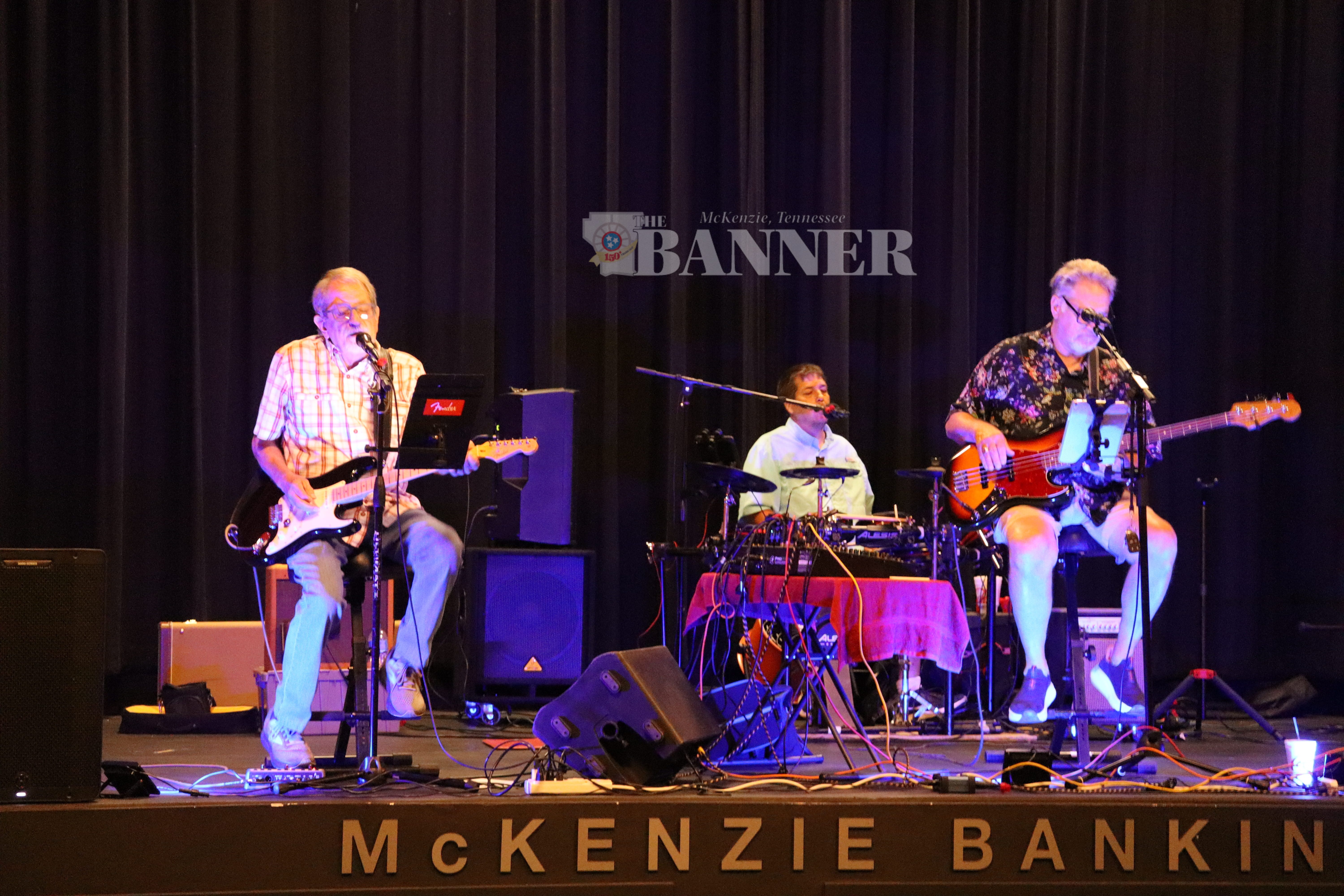
Wallace and Company Delights Crowd at Park Theatre
McKENZIE (September 3) — The Nights on Broadway concert series relocated inside the historic Park Theatre to beat the heat on Thursday. Wallace and Company delighted the crowd with a mix of classic rock and country music on the McKenzie Banking Company stage. Audience members…
Sep 8, 2026
Paris Landing Arts and Crafts Festival is September 12-13
The 26th annual Paris Lakeway Kiwanis Club Arts and Crafts Festival at Paris Landing State Park features over 115 local and regional crafters displaying and selling their handmade and hand-crafted items. The setting at Paris Landing State Park provides visitors with great views while shopping. There will also be food and beverage vendors, as well as a petting zoo. Admission and parking are free.
Sep 8, 2026